ENWelcome to the Slow Listening podcast
EPISODE 09 · 37 MIN · MIND & MOTIVATION
How to Talk to Yourself
In this session, Martin and Julia explore how the way you talk to yourself shapes your confidence, motivation, and ability to learn languages.
Full episode notes on Acast ↗Find your country — or stay in English
100% English mode
ENseries, the show where we train your ears
ENstep by step.
ENToday, we're diving into something that
ENaffects all of us; how the way we talk to
ENourselves shapes our confidence and
ENlearning.
ENJulia, listen to this question carefully.
ENHave you ever thought you made a really
ENdumb mistake?
ENI have.
ENSometimes that voice inside can be
ENso quick to judge, and it's not always
ENkind.
ENAnd that self-talk can either push us
ENforward or hold us back.
ENSo here's a challenge for everyone
ENlistening; pay close attention to your
ENthoughts.
ENAre they helping you grow, or
ENgetting in your way?
ENIf you've ever felt stuck or frustrated,
ENthis episode is for you.
ENLet's learn to
ENchange that voice together, starting
ENtoday.
ENAnd here's the surprising truth; you've
ENbeen talking to yourself your whole life,
ENwhether you realize it or not.
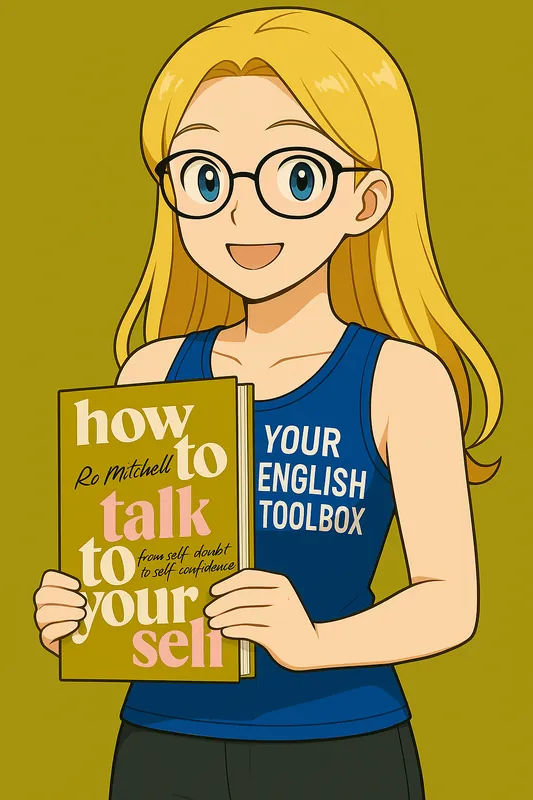
ENWe were inspired by the book How to Talk
ENto Yourself by Roe Mitchell, and we'll use
ENits ideas as the foundation for today's
ENdiscussion.
ENAnd here's why you'll want to stay with us
ENtoday; the book How to Talk to Yourself
ENby Roe Mitchell is full of strategies to
ENtransform that inner voice.
ENReading the
ENwhole book might take you six to eight
ENhours, but in this episode, just 30
ENminutes, we'll bring you the best lessons.
ENThink about that.
ENHalf an hour now saves
ENyou hours of reading later and gives you
ENthe tools to change a lifelong habit.
ENSo let's dive in together.
ENToday, you're
ENnot just listening; you're rewriting the
ENscript of your own mind.
ENSo let's start with a simple question.
ENJulia, how often do you actually pay
ENattention to the voice in your head?
ENThat's a great way to begin.
ENHonestly, I used to almost never notice
ENit.
ENMy inner voice was like background
ENnoise; it was there all the time, but I
ENdidn't realize how much it influenced me
ENuntil I started paying attention.
ENAnd
ENhere's the thing;
ENmost of the time, it wasn't kind.
ENIt was
ENcritical,
ENimpatient,
ENand sometimes
ENeven cruel.
ENLet me ask you, Martin, when you catch
ENyourself thinking, are those thoughts
ENusually supportive or judgmental?
ENIf I'm being real, for years
ENthey were judgmental.
ENIf I made a mistake, I would call myself
ENstupid or lazy or careless, and I thought
ENthat being hard on myself would push me to
ENimprove.
ENBut what actually happened, I
ENjust felt smaller, more anxious, less
ENmotivated, and I think many of our
ENlisteners can relate.
ENQuick question for
ENyou, audience; if you had to describe your
ENself-talk right now in one word, what
ENwould it be?
ENEncouraging, harsh, neutral?
ENTake a second to think about it.
ENYes.
ENThat's such an important reflection
ENbecause once you become aware of the
ENquality of your self-talk, you realize
ENit's like a constant companion.
ENImagine
ENwalking around all day with someone
ENwhispering in your ear; if that person is
ENsupportive, you feel stronger; if that
ENperson is critical, life feels heavier.
ENAnd here's something fascinating; the
ENvoice we develop usually starts early in
ENlife.
ENChildhood experiences, school,
ENsocial comparisons, even social media; all
ENof these shape how we speak to
ENourselves.
ENExactly.
ENI remember a time in school when
ENI froze during a presentation.
ENMy
ENclassmates laughed, and from that day on,
ENmy inner voice kept repeating, "You're
ENterrible at public speaking.
ENDon't even
ENtry." And the crazy part?
ENThat voice
ENstayed with me for years long after the
ENevent itself.
ENJulia, do you have a moment
ENwhen your self-talk began to turn
ENnegative?
ENYes, definitely.
ENFor me, it was around
ENbody image.
ENI compared myself to other
ENgirls in magazines and on TV, and I told
ENmyself, "You're not good enough." That
ENbecame a loop in my head, and every time I
ENlooked in the mirror, the voice repeated
ENit.
ENIt's heartbreaking how quickly those
ENwords become beliefs, and this brings us
ENto a crucial point.
ENThe brain actually
ENtreats repeated thoughts like facts.
ENSo if
ENyou tell yourself every day that you're a
ENfailure, your brain starts to believe it.
ENThat's huge, and it also explains why
ENself-talk can affect not just our emotions
ENbut even our physiology.
ENThink about it;
ENwhen you say, "I can't handle this,"
ENyour body reacts with stress.
ENYour heart
ENraces, your breathing gets shallow.
ENOn the
ENother hand, if you say, "This is tough,
ENbut I'll take it one step at a time," your
ENbody relaxes a little.
ENAudience, have you
ENever noticed how a single thought can
ENchange how your body feels?
ENThat's the
ENpower of language.
ENAnd the language we use with ourselves
ENmatters even more than what others say to
ENus
ENbecause we hear it constantly.And
ENunfortunately, many of us use words we
ENwould never say to a friend.
ENWe call
ENourselves stupid, worthless, ugly,
ENlazy.
ENSo here's a question for you,
ENMartin.
ENWhy do you think it's easier to be
ENcompassionate to others than to
ENourselves?
ENI think it's because we're taught to value
ENkindness toward others, but not toward
ENourselves.
ENSociety often praises
ENself-criticism as discipline.
ENIf you push yourself harder, people say
ENyou're strong.
ENBut actually, relentless
ENself-criticism just breaks you down, and
ENthat's why the shift to compassionate
ENself-talk is revolutionary.
ENIt's not
ENindulgence; it's survival.
ENIt's
ENgrowth.
ENYes, and that shift starts with awareness.
ENHere's a simple exercise.
ENFor one day,
ENwrite down the sentences you hear in your
ENhead.
ENDon't judge them; just collect them
ENlike a scientist.
ENAt the end of the day,
ENlook at your list. Are the sentences
ENsupportive or destructive?
ENThat awareness
ENalone can be shocking.
ENI love that.
ENAnd once you see the
ENpatterns, the next step is to challenge
ENthem.
ENLet me give an example.
ENSuppose you
ENwrite down, "I always fail." Now,
ENis that true?
ENAlways?
ENOr have you had
ENsuccesses too?
ENWhen you ask these questions, you weaken
ENthe power of the negative statement.
ENJulia, do you have a favorite technique
ENfor challenging negative self-talk?
ENYes.
ENI like reframing.
ENFor example, instead of
ENsaying, "I'm terrible at this," I try to
ENsay, "I'm learning.
ENI haven't mastered it
ENyet, but I'm improving." The word yet is
ENso powerful.
ENIt opens the door to growth.
ENAudience, you can try this right
ENnow.
ENTake a negative sentence you often
ENtell yourself and add the word yet.
ENNotice how it changes the feeling.
ENThat's brilliant.
ENAnd there's another tool
ENI like, the friend test. Ask yourself,
EN"Would I say this to a friend in the same
ENsituation?" If the answer is no, then why
ENsay it to yourself?
ENAnd here's a little
ENsecret.
ENYour brain doesn't know the
ENdifference between real and imagined
ENexperiences.
ENSo when you practice kinder
ENself-talk, your brain begins to believe it
ENjust as it once believed the negative
ENloops.
ENExactly.
ENAnd this is where repetition
ENcomes in.
ENJust like negative thoughts become beliefs
ENthrough repetition, positive thoughts can
ENtoo.
ENBut it takes practice.
ENYou can't
ENsay, "I'm worthy," once and expect your
ENbrain to change overnight.
ENIt's about
ENbuilding a habit of kindness.
ENOne
ENpractical way is affirmations.
ENBut, and I
ENwant to emphasize this, not empty,
ENunrealistic affirmations.
ENSaying, "I'm the
ENmost successful person in the world,"
ENwhen you don't believe it will feel fake.
ENInstead, use gentle, believable
ENaffirmations like, "I'm learning to trust
ENmyself."
ENThat's key.
ENStart with something you can believe and
ENpair it with action.
ENFor example, if you say, "I'm capable of
ENgrowth," then actually try something new,
ENeven if it's small.
ENThe action reinforces
ENthe thought.
ENJulia, can you share a personal example of
ENhow affirmations or reframing worked for
ENyou?
ENSure.
ENA few years ago, I was terrified of
ENspeaking up in meetings.
ENMy inner voice
ENsaid, "You'll sound stupid." So I started
ENusing a new phrase, "I have ideas worth
ENsharing." At first, it felt
ENuncomfortable, but each time I spoke, even
ENa little, I reinforced that
ENbelief.
ENOver time, the fear shrank.
ENAnd that's the magic.
ENWords plus
ENrepetition plus action equal to
ENtransformation.
ENLove that formula.
ENAnd I think we should
ENalso talk about mindfulness
ENbecause sometimes self-talk spirals so
ENfast we don't even notice it.
ENMindfulness, pausing, breathing, grounding
ENcreates a space where we can catch the
ENthought before it controls us.
ENAudience, next time you feel anxious, try
ENthis.
ENStop, take three slow
ENbreaths, and ask, "What did I just tell
ENmyself?" You'll be surprised by what you
ENhear.
ENYes.
ENAnd mindfulness also helps us develop
ENcompassion
ENbecause when we slow down, we realize that
ENeveryone struggles.
ENYou're not the only
ENone with a critical inner voice.
ENThat
ENshared humanity makes it easier to be kind
ENto yourself.
ENAnd kindness is not
ENweakness; it's strength.
ENIt
ENtakes courage to change the way you speak
ENto yourself after years of criticism.
ENBeautifully said.
ENAnd that courage brings
ENus to another idea,
ENsetbacks.
ENEven when you start practicing
ENpositive self-talk, you'll have days when
ENthe old voice comes back.
ENThat's normal.
ENThe point isn't perfection; it's
ENpersistence.
ENJulia, what do you say to
ENyourself when you catch the old critical
ENvoice returning?
ENI say, "Ah, there you are." I treat it
ENlike an old habit knocking on my door.
ENI
ENdon't have to invite it in.
ENI just notice it and return to my new
ENhabit, and that's important, noticing
ENwithout judgment.
ENIf you judge yourself
ENfor having negative thoughts, you just
ENcreate another layer of negativity.
ENThat's so powerful.
ENAudience, th- think
ENabout this.
ENCan you notice your critical
ENthoughts without fighting them?
ENCan you
ENlet them pass like clouds in the sky?
ENThat's a practice worth
ENtrying.
ENAnd to close this part of our
ENconversation, I want to highlight one big
ENtakeaway.
ENYour self-talk is not just
ENnoise.
ENIt's shaping your beliefs, your
ENemotions, even your body.
ENBut the good
ENnews is you can train it.
ENYou can
ENtransform it from an enemy into an
ENally.
ENMartin, before we move forward, I
ENwant to ask you something.
ENWhen you
ENstarted to change your self-talk, did it
ENfeel natural, or was it
ENawkward, almost like pretending?
ENOh, it felt so fake at first.
ENI remember standing in front of the mirror
ENsaying things like, "You're doing your
ENbest.
ENYou're learning," and my brain was
ENlike, "No, you're not.
ENYou're lying." It
ENwas uncomfortable, but here's what I
ENdiscovered.
ENAt the beginning, it's not
ENabout believing the words instantly.
ENIt's
ENabout planting seeds.
ENOver time, if you
ENkeep watering them, they grow into real
ENbeliefs.
ENExactly.
ENI think that's one of the biggest
ENchallenges.
ENPeople expect instant
ENresults.
ENThey say, "I tried positive
ENself-talk once, and it didn't work." But
ENthe truth is you need repetition.
ENIt's
ENjust like learning a language.
ENYou can't
ENstudy English for one day and expect
ENfluency.
ENYou need daily practice.
ENAudience, think about how long you've been
ENpracticing negative self-talk, probably
ENyears, maybe decades.
ENSo it makes sense
ENthat changing it takes time.
ENThat's such a good analogy.
ENAnd speaking
ENof practice, let's share some specific
ENstrategies that really work.
ENOne that I
ENlove is journaling.
ENEvery night, I write
ENdown three things, a negative thought I
ENcaught myself saying, how I can reframe
ENit, something I'm grateful for.
ENThis way,
ENI don't just notice the negativity.
ENI
ENactively rewrite it.
ENThat's brilliant, and I do something
ENsimilar.
ENIn the morning, I write what I
ENcall compassionate intentions.
ENFor
ENexample, today, I'll speak kindly to
ENmyself when I make mistakes.
ENIt's like
ENsetting a gentle rule for the day.
ENMartin,
ENdo you ever combine self-talk with
ENphysical grounding, like breathing or
ENmovement?
ENYes.
ENIn fact, one of my favorite practices
ENis pairing affirmations with deep
ENbreathing.
ENI inhale and think, "I'm strong
ENenough to face this," and I exhale and
ENrelease tension.
ENWhen the body and the
ENwords align, the message feels more real.
ENAudience, you can try this right
ENnow with us.
ENTake a deep breath in and
ENsilently say, "I'm safe."
ENNow breathe out and imagine letting go of
ENstress.
ENDoesn't that feel different?
ENI love that, and it's so accessible.
ENYou
ENcan do it at your desk, on the
ENbus, anywhere.
ENAnother tool I want to
ENshare is visualization.
ENWhen
ENI catch myself being harsh, I imagine a
ENsupportive friend sitting next to me.
ENI
ENpicture what they would say.
ENUsually, it's
ENmuch kinder than my own words.
ENThen I
ENborrow their voice.
ENThat's powerful, and it connects to
ENsomething else, creating a supportive
ENinner coach.
ENImagine the best teacher you've ever had,
ENthe one who encouraged you, corrected you
ENgently, believed in you.
ENWhat if you let that voice live inside
ENyour head permanently?
ENAnd here's a question for our listeners.
ENWho would you choose as your inner coach?
ENMaybe a teacher, a mentor, a parent, or
ENeven a fictional character.
ENPicture their words guiding you.
ENThat's such a fun exercise.
ENI once had a
ENstudent who chose Yoda from Star Wars as
ENher inner coach.
ENShe said whenever she
ENfelt nervous, she imagined Yoda
ENwhispering, "Calm you must be." It worked
ENfor her because it made her smile and
ENrelax.
ENSo don't be afraid to be
ENplayful.
ENSelf-talk doesn't have to be
ENheavy.
ENIt can be creative.
ENI love that example.
ENAnd here's another angle, environment.
ENWho
ENwe spend time with influences our inner
ENdialogue.
ENIf you're surrounded by people
ENwho constantly criticize, your self-talk
ENwill echo that.
ENBut if you're with people
ENwho lift you up, you absorb their
ENlanguage.
ENJulia, have you ever noticed how
ENfriendships shape your inner
ENvoice?
ENAbsolutely.
ENI used to have a group of
ENfriends who were very sarcastic.
ENThey
ENteased each other all the time.
ENAt first,
ENI thought it was harmless.But I realized
ENtheir words echoed in my head as
ENself-criticism.
ENWhen I moved into a more
ENsupportive circle, my self-talk softened
ENtoo.
ENSo audience, take a look at your
ENrelationships.
ENAre they feeding your
ENcritical voice or your compassionate one?
ENThat's so important, and I think we should
ENaddress a common fear here.
ENPeople worry that if they're kind to
ENthemselves, they'll become lazy.
ENThey
ENthink, "If I stop criticizing myself, I'll
ENnever improve." Julia, what do you
ENsay to that?
ENI say the opposite is true.
ENImagine a
ENcoach who constantly screams at their
ENathletes, "You're useless.
ENYou'll never
ENwin." Do you think those athletes will
ENperform well?
ENProbably not.
ENThey'll feel
ENcrushed.
ENNow imagine a coach who says,
EN"You've got this.
ENMistakes are part of
ENlearning.
ENKeep going." That athlete is
ENmuch more likely to thrive.
ENSelf-talk
ENworks the same way.
ENCompassion fuels
ENgrowth.
ENYes, and this is supported by psychology
ENtoo.
ENStudies show that
ENself-compassion leads to greater
ENresilience, persistence, and even better
ENperformance.
ENCriticism might give you a
ENshort burst of energy, but compassion
ENsustains you for the long run.
ENAudience, think about it.
ENWhen was the
ENlast time harsh words actually made you
ENimprove, and when was the last time
ENencouragement helped you try again?
ENThat's a perfect reflection.
ENAnd speaking
ENof trying again, we should talk about
ENsetbacks
ENbecause no matter how much you practice
ENpositive self-talk, you'll have days when
ENthe critical voice shouts louder.
ENWhat
ENmatters is how you respond.
ENInstead of
ENsaying, "I failed at being positive," you
ENcan say, "This is part of the process.
ENIt's about progress, not perfection."
ENI completely agree.
ENOne technique I use is giving my inner
ENcritic a nickname.
ENMine is the Judge.
ENWhen it speaks up, I
ENsay,
EN"Thanks, Judge, but I'm not interested
ENright now." It helps me separate the
ENthought from my identity.
ENJulia, do you
ENuse something similar?
ENYes,
ENI call mine the Parrot
ENbecause it just repeats old lines it
ENlearned years ago.
ENWhen I hear it, I
ENimagine a little bird on my shoulder
ENsquawking nonsense.
ENThat image makes it
ENless threatening
ENand sometimes even funny.
ENAudience, maybe you can try naming your
ENinner critic too.
ENGive it a silly name and
ENsee how much easier it becomes to ignore.
ENThat's such a good idea, and humor is
ENunderrated in self-growth.
ENLaughing at the
ENinner critic takes away its power.
ENNow, before we wrap up this part, I want
ENto highlight another strategy:
ENgratitude.
ENWriting down three things
ENyou're grateful for each day shifts your
ENfocus.
ENIt trains your brain to look for
ENthe positive instead of the negative.
ENOver
ENtime, gratitude becomes the default voice
ENin your head.
ENYes, gratitude is like rewiring your
ENbrain, and it doesn't have to be big
ENthings.
ENIt can be as simple as, "I'm
ENgrateful for my morning coffee," or, "I'm
ENgrateful for the smile of a stranger."
ENAudience,
ENwhat's one small thing you feel grateful
ENfor right now?
ENSay it out loud or write it down.
ENNotice
ENhow it changes your mood
ENinstantly.
ENBeautiful.
ENSo to summarize this part of
ENour conversation, self-talk feels awkward
ENat first, but practice makes it natural.
ENJournaling, reframing, breathing,
ENvisualization, and gratitude are powerful
ENtools.
ENYour environment shapes your inner
ENvoice.
ENCompassion is not laziness;
ENit's the fuel for resilience.
ENSetbacks are normal, and humor can be your
ENsecret weapon.
ENJulia, I think these are the building
ENblocks of a healthier relationship with
ENourselves.
ENI agree.
ENAnd in the next part, let's go
ENeven deeper.
ENLet's talk about how
ENcompassionate self-talk influences
ENrelationships, work, and long-term
ENidentity
ENbecause the way we speak to ourselves
ENdoesn't just stay inside; it changes how
ENwe show up in the world.
ENYes, I'm excited for that.
ENSo stay with
ENus, listeners, because we're about to
ENexplore how transforming your inner voice
ENcan transform your entire life.
ENJulia, you
ENmentioned something at the end of our
ENlast part that really struck me.
ENThe way
ENwe talk to ourselves doesn't stay inside;
ENit spills into how we interact with the
ENworld.
ENCan we dig deeper into that?
ENOf course.
ENThink about this.
ENIf your
ENself-talk is harsh, you probably approach
ENrelationships with insecurity.
ENYou might
ENover-apologize, avoid conflict, or doubt
ENyour worth.
ENBut if your self-talk is
ENcompassionate, you show up with
ENconfidence, patience, and openness.
ENIn
ENother words, the dialogue you have with
ENyourself becomes the tone of your dialogue
ENwith everyone else.
ENYes, I've noticed that too.
ENWhen I was
ENdeeply self-critical, I was defensive with
ENothers.If someone gave me feedback, I
ENheard it as an attack
ENbecause my own inner critic was already
ENattacking me.
ENOnce I softened my
ENself-talk,
ENfeedback became easier to accept.
ENAudience, have you ever noticed that how
ENyou treat yourself sets the stage for how
ENyou treat others?
ENAnd it's not just relationships; it's work
ENtoo.
ENImagine going into a job
ENinterview.
ENIf your self-talk says, "You're
ENgoing to mess this up," your body will
ENtense, and your answers will sound
ENuncertain.
ENBut if your self-talk says,
EN"You're prepared; you've got value to
ENshare," you walk in taller, calmer, more
ENpersuasive.
ENThat's the invisible power of
ENinner language.
ENExactly.
ENAnd this is where we can talk about
ENidentity.
ENBecause over time, self-talk
ENdoesn't just describe us, it defines us.
ENIf you keep saying, "I'm shy," or, "I'm
ENunlucky," those words become part of your
ENidentity.
ENBut if you change the script to, "I'm
ENlearning to be more confident,"
ENor, "I'm creating opportunities," your
ENidentity shifts too.
ENJulia, do
ENyou remember a moment when changing your
ENinner language changed your identity?
ENYes, I do.
ENFor years, I told myself, "I'm bad with
ENtechnology." It was a fixed identity.
ENThen
ENI decided to reframe it.
EN"I'm learning
ENnew tools step by step." That simple shift
ENopened doors.
ENI started experimenting,
ENasking for help, even teaching
ENothers.
ENI went from bad with technology to
ENcurious about technology.
ENSo the words we choose don't just reflect
ENwho we are, they sculpt who we become.
ENThat's powerful, and it makes me wonder,
ENwhat hidden identities are our listeners
ENcarrying right now because of their
ENself-talk?
ENMaybe someone keeps saying, "I'm always
ENanxious," or, "I'm not creative." What
ENif those aren't facts but just habits of
ENlanguage?
ENAudience, here's a
ENchallenge.
ENPick one limiting phrase you
ENsay about yourself and reframe it into a
ENgrowth phrase.
ENWrite it down.
ENRepeat it
ENdaily.
ENWatch how your sense of self
ENevolves.
ENThat's a fantastic exercise, and I'd add
ENanother.
ENSpeak your reframed identity out
ENloud.
ENThere's something about hearing your
ENown voice that makes it more real.
ENIt's
ENlike giving yourself permission to change.
ENYes.
ENBecause the inner voice and the outer
ENvoice are connected.
ENThe more you speak
ENkindly to yourself, the more authentic
ENyour words to others become.
ENAnd I think we should address something
ENreally human here, setbacks in
ENrelationships with ourselves.
ENSometimes we
ENmake progress then fall back into old
ENpatterns.
ENJulia, what's your advice when
ENthat happens?
ENFirst, I remind myself that healing is not
ENlinear.
ENImagine a graph.
ENIt's not a
ENstraight line up; it's a zigzag.
ENSome days
ENare better, some worse, but the overall
ENdirection matters.
ENSecond, I practice
ENself-forgiveness.
ENInstead of saying, "I
ENruined everything," I say, "Today was
ENtough, but tomorrow is another chance."
ENForgiveness resets the cycle.
ENThat's so important.
ENBecause if we punish
ENourselves for negative self-talk, we just
ENcreate more negativity.
ENForgiveness is like a reset button.
ENAudience, have you ever forgiven yourself
ENout loud?
ENTry it.
ENSay, "I forgive myself
ENfor being hard on me today." Notice how it
ENfeels in your body.
ENYes.
ENAnd forgiveness connects to
ENcompassion.
ENCompassion means understanding
ENthat you're human, imperfect, and still
ENworthy of kindness.
ENIt's not about
ENexcusing mistakes; it's about recognizing
ENthat mistakes don't define your value.
ENExactly.
ENAnd here's where things get
ENexciting.
ENWhen you consistently practice
ENcompassionate self-talk, you start to
ENexperience resilience.
ENLife will still
ENbring challenges, anxiety, stress,
ENfailure, but your response changes.
ENInstead of collapsing, you bounce back.
ENThat's the gift of training your inner
ENvoice.
ENAnd it's not only about resilience, it's
ENalso about joy.
ENNegative self-talk narrows
ENyour focus to flaws and problems.
ENPositive self-talk opens your eyes to
ENbeauty, gratitude, and possibility.
ENYou
ENliterally experience more joy because you
ENgive yourself permission to see it.
ENThat's beautiful, and it reminds me of
ENnature.
ENNo matter what happens in our
ENpersonal lives, the sun still rises, the
ENwaves still move, the world continues.
ENSelf-talk is like tuning into that
ENrhythm, remembering that setbacks are
ENtemporary but life keeps flowing.
ENAudience, next time you feel overwhelmed,
ENstep outside and notice something
ENconstant, the sky, the trees, the air.
ENLet
ENit remind you that your inner storms
ENwill pass.
ENI love that image.
ENAnd let's bring this
ENdown to very practical advice for our
ENlisteners.
ENMartin, if someone wants to
ENstart transforming their self-talk today,
ENwhat's the first step you'd recommend?
ENStep one, awareness.
ENSpend one day noticing the sentences in
ENyour head.
ENWrite them down.
ENAwareness is
ENthe foundation.
ENWithout it, you can't
ENchange anything.
ENStep two,
ENchallenge.
ENAsk, "Is this thought true?"
ENAlways, "Can
ENI see it differently?" Step three,
ENreplace.
ENReframe the negative into
ENsomething constructive and compassionate.
ENAnd step four, repeat.
ENDo it
ENagain and again until it becomes a habit.
ENThat's a perfect roadmap.
ENAnd I'd add step
ENfive, celebrate.
ENCelebrate small wins.
ENIf
ENyou caught one negative thought and
ENreplaced it today, that's progress.
ENClap
ENfor yourself, smile, acknowledge the
ENeffort.
ENAudience, please don't
ENunderestimate small victories.
ENThey add up
ENto big transformations.
ENAbsolutely.
ENAnd since this is your English
ENtoolbox, let me connect it to language
ENlearning for a second.
ENMany learners say
ENto themselves, "I'll never be fluent," or,
EN"My accent is terrible." That's negative
ENself-talk, and it blocks progress.
ENBut if
ENthey change the script to, "I'm improving
ENevery day," or, "My accent shows I'm
ENbilingual, and that's powerful," they
ENlearn faster.
ENThe inner voice shapes the learning
ENjourney.
ENYes.
ENI've seen students blossom when they
ENstop attacking themselves for mistakes.
ENMistakes are not proof of failure; they're
ENproof of growth.
ENSo listeners, if you're
ENlearning English or any skill, remember,
ENthe words you use inside will determine
ENhow far you go outside.
ENExactly.
ENAnd before we wrap up, I wanna
ENleave our audience with one final thought.
ENYour self-talk is a lifelong companion.
ENYou can't escape it, but you can choose
ENwhether it's a critic or a coach, an enemy
ENor a friend.
ENAnd my final message is this, be patient.
ENTransforming self-talk is like building a
ENnew friendship with yourself.
ENIt takes
ENtime, but it's worth it.
ENImagine living
ENevery day with a supportive best friend in
ENyour mind.
ENThat's what's possible.
ENSo to recap everything we've covered
ENacross this conversation,
ENself-talk shapes emotions, body, identity,
ENand relationships.
ENNegative voices often come from early
ENexperiences, but can be transformed.
ENTools
ENlike journaling, reframing, affirmations,
ENbreathing, visualization, gratitude,
ENhumor, and self-forgiveness really work.
ENCompassion isn't
ENindulgence; it's resilience.
ENAnd your inner words don't just stay
ENinside.
ENThey change how you live, love,
ENand grow.
ENSo, before we close, let's talk about
ENsomething really important.
ENChanging your
ENself-talk isn't just about you.
ENIt's about
ENus, this community we're building
ENtogether.
ENBecause when you share the words
ENyou're choosing,
ENsomeone else reads them, and suddenly they
ENfeel less alone.
ENThink about the
ENmicro-tasks we practiced today.
ENWe asked
ENyou to add the word yet to a negative
ENthought.
ENWhich one did you choose?
ENWe suggested you
ENgive your inner critic a nickname.
ENDid
ENyou call it the judge, the parrot,
ENsomething funnier?
ENWe encouraged you to write down one gentle
ENaffirmation you actually believe.
ENWhat's
ENyours?
ENThese aren't just private exercises.
ENIf
ENyou share them in the comments, you're
ENplanting ideas for other learners.
ENYou
ENbecome part of their journey.
ENAnd here's why this matters.
ENOur channel
ENis not about passive listening.
ENIt's about
ENslow listening, plus active living.
ENIf
ENyou only listen, the lesson stays in your
ENears.
ENIf you comment, the lesson travels
ENinto your hands, your voice, your
ENidentity.
ENSo I want to challenge you.
ENBe brave
ENtoday.
ENComment one of three
ENthings.
ENThe negative sentence you transformed with
ENyet.
ENThe nickname you gave your inner critic.
ENOr the affirmation you'll start repeating
ENto yourself this week.
ENChoose one.
ENPost it below, because your
ENcomment isn't just for us.
ENIt's for every
ENperson who reads it and thinks, "Yes, me
ENtoo.
ENI can try that."
ENImagine what happens when dozens of people
ENstart sharing.
ENSuddenly, you don't feel
ENlike a single listener.
ENYou feel like part
ENof a circle, a movement, a team
ENpracticing together.
ENSo let's make this the moment where our
ENcomment section becomes alive.
ENLet's make
ENit a safe place to share inner voices,
ENstruggles, and victories.
ENRemember, listen slowly, learn deeply, and
ENspeak confidently.
ENSee
ENyou in the next episode.