ENWelcome to your English toolbox, where we train your ears, step by step.
EPISODE 77 · 9 MIN · MIND & MOTIVATION
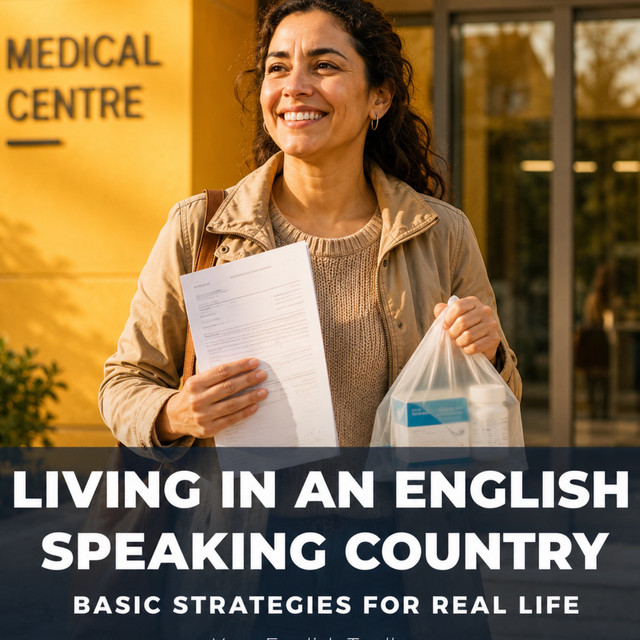
Living in an English Speaking Country
You live in an English-speaking country. The language is everywhere — at the pharmacy, at work, on the phone, at the doctor's.
Full episode notes on Acast ↗Find your country — or stay in English
100% English mode
ENWant to take your learning even further?
ENFind your English toolbox on YouTube to watch every episode with subtitles.
ENIt is the best way to support this project, and we truly appreciate it.
ENHello friends, and welcome to this brand new journey.
ENI am Miranda, and I am so incredibly happy to walk beside you.
ENAnd I am Robert, your guide in this new space we have
ENbuilt, just for you.
ENToday, we are starting a very special series dedicated to those brave friends who are currently living in an English-speaking country.
ENIf you are listening to us from the UK, the United States, Australia, or any place where English is the language of the streets, this is your home.
ENWe know exactly how you feel, because living in a country when you are still mastering the language is a daily act of courage.
ENBy listening to
ENthe end of this conversation, you will understand why your brain feels so exhausted.
ENYou will discover the power of a single rescue sentence, and you will completely redefine what it means to speak English.
ENSo, take a deep breath, grab a warm cup of tea, and let's begin.
ENThe cultural shock and the receptive overload Imagine this familiar scene, because it happens to thousands of people every single day.
ENYou wake up in your new apartment, and you feel
ENgood.
ENYou feel ready.
ENYou walk out the front door.
ENYou step onto the street.
ENAnd suddenly, the English language hits you like a massive wall of sound.
ENThe cashier at the supermarket.
ENThe train announcement.
ENThe casual greeting of your neighbor.
ENEverything happens so incredibly fast.
ENBy the time you arrive home in the evening, your head is heavy, and your energy is completely gone.
ENThis is what psychologists call receptive overload.
ENYour beautiful mind is working double shifts,
ENprocessing sounds, translating words, and trying to predict what people will say next.
ENI want to tell you something very important right now.
ENThat exhaustion you feel is not a sign of failure.
ENIt is actually the opposite.
ENIt is proof that your brain is actively learning, and adapting to a brand new environment.
ENLet me share a real story with you.
ENThe story of a friend named Sophia, who moved to Houston, Texas, a few months ago.
ENSophia had
ENa basic level of English.
ENShe knew grammar rules, but she had never interacted with real native speakers in a busy environment.
ENOne morning, Sophia had her very first medical appointment at a local clinic.
ENShe was terrified.
ENHer heart was beating so fast in the waiting room.
ENWhen the nurse finally called her name, Sophia stood up and her mind went completely blank.
ENThe nurse was speaking with a fast Texas accent, asking questions about medical history and insurance
ENforms.
ENSophia felt so small, she just smiled, nodded her head, and felt a deep sense of shame creeping in.
ENShe left the clinic crying, thinking that she would never, ever be able to survive in that city.
ENBut Sophia did something wonderful after that difficult day.
ENShe changed her strategy.
ENShe understood that she did not need a perfect accent, she just needed a system to protect her peace of mind.
ENThe Empowering Strategy Accessing Your Rescue Sentence Sophia
ENdiscovered what we call the Rescue Sentence Strategy.
ENWhen your level is basic, you cannot control how fast a native speaker talks, but you can control how you respond to them.
ENInstead of smiling and pretending you understand, you must immediately use a clear, firm, and polite shield.
ENSophia practiced one specific sentence until it became an automatic reflex.
ENShe learned to look people in the eyes and say, My English is still improving.
ENCould you please say that slowly?
ENNotice how powerful that phrase is.
ENIt does not apologize.
ENIt does not say, I am sorry my English is bad.
ENIt states a beautiful fact, My English is improving, and it places the responsibility on the native speaker to speak with clarity.
ENWhen Sophia went back to the clinic the following week, she used her rescue sentence with the receptionist.
ENThe result was magical.
ENThe receptionist smiled, slowed down her rhythm, and even helped Sophia fill out the paperwork.
ENOne single sentence completely changed the emotional dynamic of the entire room.
ENShifting Your Identity in the Real World This brings us to the core principle of our journey together.
ENIdentity precedes fluency.
ENMany basic learners believe they will only belong in their new country when they speak fluent English.
ENThat is a dangerous trap, because fluency takes time, and you need to live your life today.
ENYou must change your identity right now.
ENYou are not a helpless foreigner
ENstruggling to survive.
ENYou are an active, capable, and courageous bilingual person in training.
ENEvery single time you go to a shop, every time you ask for directions, even when you make a mistake, you are building your new identity.
ENMistakes are not crimes.
ENThey are simply the currency you pay to achieve fluency.
ENThe natives you encounter every day are not judges.
ENThey are just people going about their business.
ENWhen you speak slowly and deliberately, you teach them
ENhow to talk to you.
ENThe Sprint Final Essential Habits for Immigrants Let's review the three golden habits for your daily life from this moment on.
ENFirst, stop translating every word in your head.
ENFocus only on the main action verbs and nouns.
ENSecond, embrace the beautiful power of the pause.
ENIt is completely okay to wait three seconds before you answer a question.
ENSilences feel long to you, but to a native speaker, they just look like you are
ENbeing thoughtful and calm.
ENAnd third, never skip an interaction because of fear.
ENChoose consistency over intensity every single day.
ENThe Identity Close and YouTube Call to Action Today we have reframed your relationship with your new environment.
ENRemember Sophia, and remember that your current exhaustion is just your brain getting stronger.
ENYou are not just a visitor in this country.
ENYou are someone who belongs here.
ENIf you made it this far, you are truly committed to your English.
ENPlease head over to YouTube, search for your English toolbox, and subscribe.
ENYour support there means the world to us, and keeps this podcast growing.
ENThank you so much for your trust and your beautiful courage.
ENStay strong, be gentle with yourself, and we will see you in our next episode.
ENGoodbye for now, friends.