The audio controls above still work. Interactive translation, saving and practice need JavaScript. You can read the complete transcript and download your study materials below.
Complete English transcript
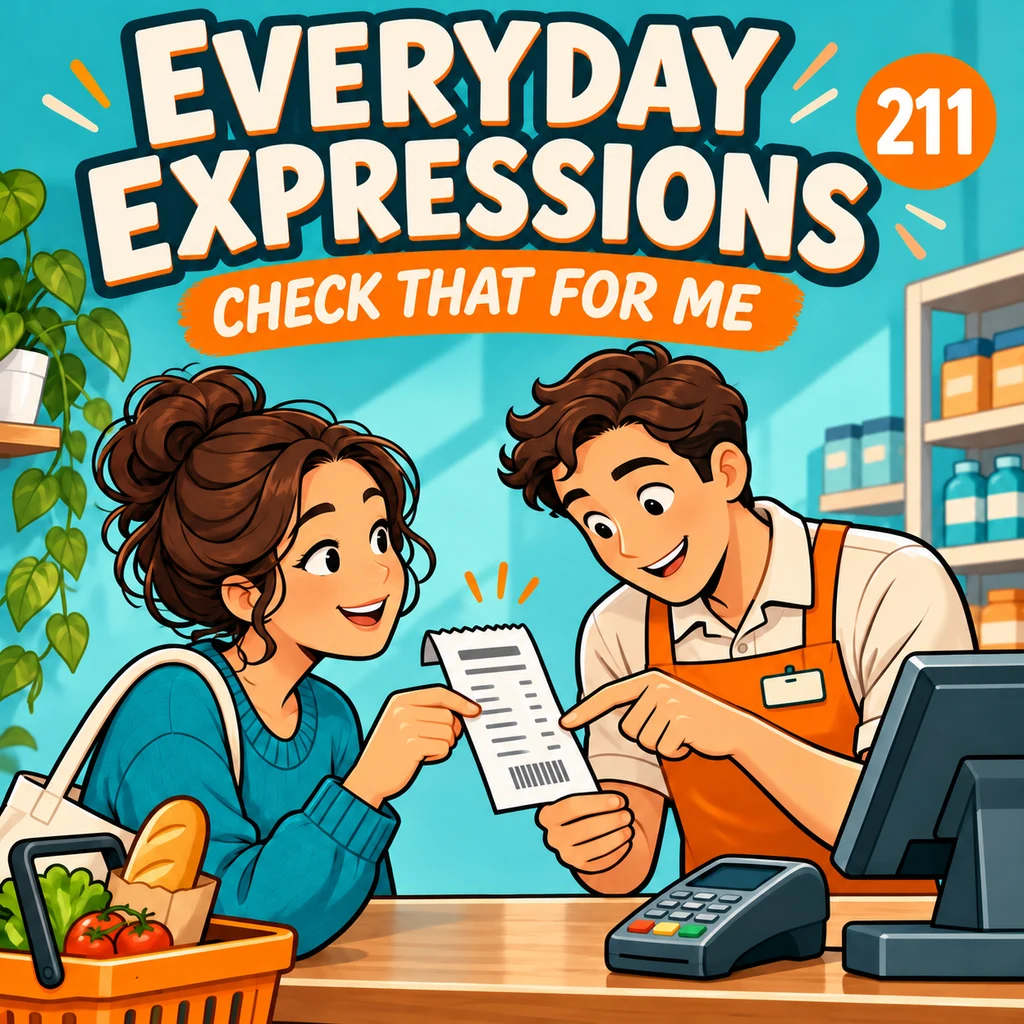
Julia, I think there is a mistake on my receipt.
What would you like to do?
I want to ask someone to check it, but I do not want to sound rude.
Then today we have a practical situation for you.
Welcome to Everyday Useful Expressions, from Your English Toolbox.
Today we will explain a problem clearly and ask for help politely.
Imagine that you ordered a sandwich, but the receipt shows two.
You do not need a long speech.
You can begin with, I think there might be a mistake.
That introduces the problem without immediately blaming anyone.
Listen to the whole sentence.
I think there might be a mistake on my receipt.
The words I think and might make the statement less certain.
They leave room for the other person to check the facts.
You can be polite and still be clear.
For example, I think there might be a mistake with my reservation.
Now let us describe the specific problem.
I ordered one sandwich, but the receipt shows two.
That is simple and concrete.
The person helping you can understand what needs attention.
Our next expression is, could you check that for me?
Could you check that for me?
This politely asks someone to look at the problem.
You could also point to the receipt and say, could you check this for me?
Use this for the thing in front of you, and that for something already mentioned or further away.
The other person might reply, of course, let me take a look.
Let me take a look means, let me examine it.
Now imagine a different situation.
You booked a room with two beds, but the reservation shows one bed.
You can explain your expectation by saying, I was expecting two beds.
I was expecting means that you thought something different would happen or be provided.
You are explaining the difference between what you expected and what you see.
You can add, could you check the booking for me?
The next useful question is, what can we do about it?
What can we do about it?
This invites the other person to discuss a possible solution with you.
It is a good question when you have explained the problem and want to know the next step.
The answer might be, I can correct the receipt.
Or, let me see if another room is available.
If the matter is not clear, you can ask another short question.
Could you explain that, please?
You do not need to understand everything immediately.
Asking politely for clarification is part of a successful conversation.
Let us hear a short exchange from beginning to end.
I think there might be a mistake on my receipt.
Of course, what seems to be the problem?
I ordered one sandwich, but the receipt shows two.
Thank you for telling me, and let me check that.
Could you correct it, please?
Yes, I can print a new receipt for you.
Each turn gives the other person a clear next step.
Sometimes the person helping you needs another detail.
They might ask, do you have your booking confirmation?
You can say, yes, here it is on my phone.
Or, I do not have it with me, but I can give you my name.
If you are not sure what they said, try, sorry, could you say that again?
Then listen for the key information rather than trying to understand every word at once.
A calm conversation can have several steps, and that is completely normal.
The aim is to understand the problem together and find a useful next step.
Now it is your turn.
Your receipt shows an item you did not order.
How could you introduce the problem politely?
I think there might be a mistake on my receipt.
Now ask the person to look at it.
Could you check that for me?
And if you want to discuss a solution?
What can we do about it?
On the website, you will find five more expressions for handling everyday problems and a chance to practise them.
The link is in the episode description.
Thanks for learning with Your English Toolbox.
See you next time.