YEYour English Toolbox
AD · Leaderboard 728×90
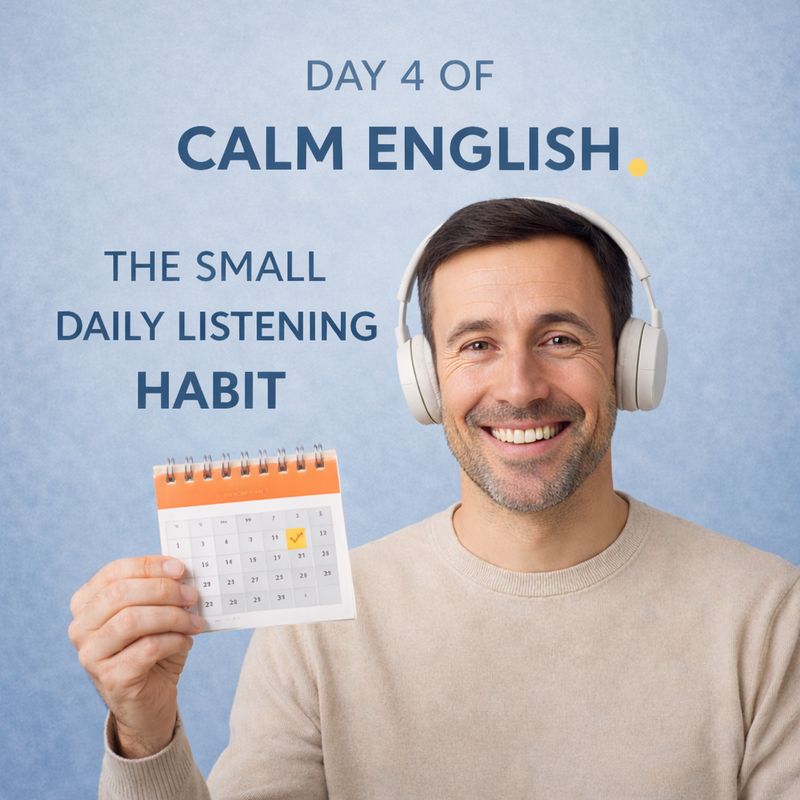
Day 4 of Calm English cover

Episode 42

Day 4 of Calm English

Welcome to 7 Days of Calm English, a new way to start your English year. One short episode, one idea, one gentle reset, no studying, no pressure, just listening. Today, we will tal…

EN → EspañolEN → DeutschEN → فارسی

🌍 Spin the globe below to jump to a transcript in your language.

Resources in this episode

🌍

Pick your language

Spin the globe (hover to rotate, drag or swipe to turn it) and click a country to jump to the transcript in that language.

EN

Transcript — English

The full episode script in English. Real inline text, indexable by search engines.

Peter: Welcome to 7 Days of Calm English, a new way to start your English year.

One short episode, one idea, one gentle reset, no studying, no pressure, just listening.

Today, we will talk about one small daily listening habit, a habit that actually works.

Not a big plan, not a strict schedule, just one small moment.

Every day, many learners believe progress comes from long sessions.

One hour, two hours, a lot of effort, but these sessions are hard to

repeat.

And what is hard to repeat does not become a habit.

Language grows through regular contact, not through intensity.

Think about this situation.

You plan to study English for one hour, you feel tired, you postpone it, and then you feel guilty.

This cycle is very common and very discouraging.

It slowly breaks motivation.

Now imagine something different.

You decide to listen for just a few minutes, while making coffee, while walking, while resting.

There is no pressure, there

is no preparation.

You simply press play.

This small action is easy to repeat, and repetition is more powerful than effort.

When listening becomes easy, you return naturally.

And returning is what builds familiarity.

Familiarity is what builds confidence.

A daily habit does not need motivation, it needs simplicity.

Something so small that resistance disappears.

Something that fits into your life.

Not something that competes with it.

Let me give you a simple example.

Imagine you listen to English every

morning for five minutes.

Not to learn, not to improve, just to hear the language.

After a few days, English feels less distant.

After a few weeks, it feels familiar.

And familiarity changes everything.

This is why short, daily listening works.

It lowers the barrier, it removes pressure, it creates continuity.

And continuity is the real engine of learning.

Today, I invite you to choose one small listening moment.

Just one.

It can be in the morning, in the afternoon,

or in the evening.

The time does not matter.

The regularity does.

Do not measure this habit.

Do not judge it.

Do not try to optimize it.

Simply repeat it.

Day after day, even on tired days.

Especially on tired days.

Motivation often comes after action.

Not before.

When listening becomes part of your routine, motivation appears quietly, without forcing, without effort.

This is how habits grow.

So today, your only action is this.

Choose one small, daily listening moment.

Keep it simple, keep it light, and repeat it tomorrow.

And the day after, trust the process.

That is all for today.

We will continue tomorrow, slowly.

ES

Transcript — English + Español

Line by line: one English sentence, then its Español translation — clearly separated, each with its own lang markup.

ENWelcome to 7 Days of Calm English, a new way to start your English year.

EspañolBienvenido a 7 Días de Inglés Tranquilo, una nueva forma de comenzar tu año en inglés.
ENOne short episode, one idea, one gentle reset, no studying, no pressure, just listening.

EspañolUn episodio corto, una idea, un suave reinicio, sin estudiar, sin presión, solo escuchando.

ENToday, we will talk about one small daily listening habit, a habit that actually works.

EspañolHoy, hablaremos sobre un pequeño hábito diario de escucha, un hábito que realmente funciona.

ENNot a big plan, not a strict schedule, just one small moment.

EspañolNo es un gran plan, no es un horario estricto, solo un pequeño momento.

ENEvery day, many learners believe progress comes from long sessions.

EspañolCada día, muchos estudiantes creen que el progreso proviene de largas sesiones.

ENOne hour, two hours, a lot of effort, but these sessions are hard to

EspañolUna hora, dos horas, mucho esfuerzo, pero estas sesiones son difíciles de

ENrepeat.

Españolrepetir.

ENAnd what is hard to repeat does not become a habit.

EspañolY lo que es difícil de repetir no se convierte en un hábito.

ENLanguage grows through regular contact, not through intensity.

EspañolEl lenguaje crece a través del contacto regular, no a través de la intensidad.

ENThink about this situation.

EspañolPiensa en esta situación.

ENYou plan to study English for one hour, you feel tired, you postpone it, and then you feel guilty.

EspañolPlaneas estudiar inglés durante una hora, te sientes cansado, lo pospones y luego te sientes culpable.

ENThis cycle is very common and very discouraging.

EspañolEste ciclo es muy común y muy desalentador.

ENIt slowly breaks motivation.

EspañolRompe lentamente la motivación.

ENNow imagine something different.

EspañolAhora imagina algo diferente.

ENYou decide to listen for just a few minutes, while making coffee, while walking, while resting.

EspañolDecides escuchar durante solo unos minutos, mientras haces café, mientras caminas, mientras descansas.

ENThere is no pressure, there

EspañolNo hay presión, no

ENis no preparation.

Españolhay preparación.

ENYou simply press play.

EspañolSimplemente presionas play.

ENThis small action is easy to repeat, and repetition is more powerful than effort.

EspañolEsta pequeña acción es fácil de repetir, y la repetición es más poderosa que el esfuerzo.

ENWhen listening becomes easy, you return naturally.

EspañolCuando escuchar se vuelve fácil, regresas de forma natural.

ENAnd returning is what builds familiarity.

EspañolY regresar es lo que construye familiaridad.

ENFamiliarity is what builds confidence.

EspañolLa familiaridad es lo que construye confianza.

ENA daily habit does not need motivation, it needs simplicity.

EspañolUn hábito diario no necesita motivación, necesita simplicidad.

ENSomething so small that resistance disappears.

EspañolAlgo tan pequeño que la resistencia desaparece.

ENSomething that fits into your life.

EspañolAlgo que encaja en tu vida.

ENNot something that competes with it.

EspañolNo algo que compite con ella.

ENLet me give you a simple example.

EspañolDéjame darte un ejemplo simple.

ENImagine you listen to English every

EspañolImagina que escuchas inglés cada

ENmorning for five minutes.

Españolmañana durante cinco minutos.

ENNot to learn, not to improve, just to hear the language.

EspañolNo para aprender, no para mejorar, solo para oír el idioma.

ENAfter a few days, English feels less distant.

EspañolDespués de unos días, el inglés se siente menos distante.

ENAfter a few weeks, it feels familiar.

EspañolDespués de unas semanas, se siente familiar.

ENAnd familiarity changes everything.

EspañolY la familiaridad lo cambia todo.

ENThis is why short, daily listening works.

EspañolPor eso funciona la escucha corta y diaria.

ENIt lowers the barrier, it removes pressure, it creates continuity.

EspañolBaja la barrera, elimina la presión, crea continuidad.

ENAnd continuity is the real engine of learning.

EspañolY la continuidad es el verdadero motor del aprendizaje.

ENToday, I invite you to choose one small listening moment.

EspañolHoy, te invito a elegir un pequeño momento de escucha.

ENJust one.

EspañolSolo uno.

ENIt can be in the morning, in the afternoon,

EspañolPuede ser por la mañana, por la tarde,

ENor in the evening.

Españolo por la noche.

ENThe time does not matter.

EspañolEl tiempo no importa.

ENThe regularity does.

EspañolLa regularidad sí.

ENDo not measure this habit.

EspañolNo midas este hábito.

ENDo not judge it.

EspañolNo lo juzgues.

ENDo not try to optimize it.

EspañolNo intentes optimizarlo.

ENSimply repeat it.

EspañolSimplemente repítelo.

ENDay after day, even on tired days.

EspañolDía tras día, incluso en días cansados.

ENEspecially on tired days.

EspañolEspecialmente en días cansados.

ENMotivation often comes after action.

EspañolLa motivación a menudo llega después de la acción.

ENNot before.

EspañolNo antes.

ENWhen listening becomes part of your routine, motivation appears quietly, without forcing, without effort.

EspañolCuando escuchar se convierte en parte de tu rutina, la motivación aparece silenciosamente, sin forzar, sin esfuerzo.

ENThis is how habits grow.

EspañolAsí es como crecen los hábitos.

ENSo today, your only action is this.

EspañolAsí que hoy, tu única acción es esta.

ENChoose one small, daily listening moment.

EspañolElige un pequeño momento de escucha diario.

ENKeep it simple, keep it light, and repeat it tomorrow.

EspañolMantenlo simple, mantenlo ligero y repítelo mañana.

ENAnd the day after, trust the process.

EspañolY al día siguiente, confía en el proceso.

ENThat is all for today.

EspañolEso es todo por hoy.

ENWe will continue tomorrow, slowly.

EspañolContinuaremos mañana, despacio.

DE

Transcript — English + Deutsch

Line by line: one English sentence, then its Deutsch translation — clearly separated, each with its own lang markup.

ENWelcome to 7 Days of Calm English, a new way to start your English year.

DeutschWillkommen zu 7 Tagen ruhigem Englisch, einer neuen Art, dein Englischjahr zu beginnen.

ENOne short episode, one idea, one gentle reset, no studying, no pressure, just listening.

DeutschEine kurze Episode, eine Idee, ein sanfter Neustart, kein Lernen, kein Druck, nur Zuhören.

ENToday, we will talk about one small daily listening habit, a habit that actually works.

DeutschHeute werden wir über eine kleine tägliche Hörgewohnheit sprechen, eine Gewohnheit, die tatsächlich funktioniert.

ENNot a big plan, not a strict schedule, just one small moment.

DeutschKein großer Plan, kein strenger Zeitplan, nur ein kleiner Moment.

ENEvery day, many learners believe progress comes from long sessions.

DeutschJeden Tag glauben viele Lernende, dass Fortschritt aus langen Sitzungen kommt.

ENOne hour, two hours, a lot of effort, but these sessions are hard to

DeutschEine Stunde, zwei Stunden, viel Aufwand, aber diese Sitzungen sind schwer zu

ENrepeat.

Deutschwiederholen.

ENAnd what is hard to repeat does not become a habit.

DeutschUnd was schwer zu wiederholen ist, wird keine Gewohnheit.

ENLanguage grows through regular contact, not through intensity.

DeutschSprache wächst durch regelmäßigen Kontakt, nicht durch Intensität.

ENThink about this situation.

DeutschDenk an diese Situation.

ENYou plan to study English for one hour, you feel tired, you postpone it, and then you feel guilty.

DeutschDu planst, eine Stunde Englisch zu lernen, fühlst dich müde, schiebst es auf und fühlst dich dann schuldig.

ENThis cycle is very common and very discouraging.

DeutschDieser Zyklus ist sehr häufig und sehr entmutigend.

ENIt slowly breaks motivation.

DeutschEr bricht langsam die Motivation.

ENNow imagine something different.

DeutschStell dir jetzt etwas anderes vor.

ENYou decide to listen for just a few minutes, while making coffee, while walking, while resting.

DeutschDu entscheidest dich, nur ein paar Minuten zuzuhören, während du Kaffee machst, während du spazieren gehst, während du dich ausruhst.

ENThere is no pressure, there

DeutschEs gibt keinen Druck, es

ENis no preparation.

Deutschgibt keine Vorbereitung.

ENYou simply press play.

DeutschDu drückst einfach auf Play.

ENThis small action is easy to repeat, and repetition is more powerful than effort.

DeutschDiese kleine Handlung ist leicht zu wiederholen, und Wiederholung ist mächtiger als Aufwand.

ENWhen listening becomes easy, you return naturally.

DeutschWenn Zuhören einfach wird, kehrst du ganz natürlich zurück.

ENAnd returning is what builds familiarity.

DeutschUnd das Zurückkehren ist es, was Vertrautheit aufbaut.

ENFamiliarity is what builds confidence.

DeutschVertrautheit ist es, was Selbstvertrauen aufbaut.

ENA daily habit does not need motivation, it needs simplicity.

DeutschEine tägliche Gewohnheit braucht keine Motivation, sie braucht Einfachheit.

ENSomething so small that resistance disappears.

DeutschEtwas so Kleines, dass der Widerstand verschwindet.

ENSomething that fits into your life.

DeutschEtwas, das in dein Leben passt.

ENNot something that competes with it.

DeutschNicht etwas, das damit konkurriert.

ENLet me give you a simple example.

DeutschLass mich dir ein einfaches Beispiel geben.

ENImagine you listen to English every

DeutschStell dir vor, du hörst jeden

ENmorning for five minutes.

DeutschMorgen fünf Minuten Englisch.

ENNot to learn, not to improve, just to hear the language.

DeutschNicht um zu lernen, nicht um dich zu verbessern, nur um die Sprache zu hören.

ENAfter a few days, English feels less distant.

DeutschNach ein paar Tagen fühlt sich Englisch weniger fern an.

ENAfter a few weeks, it feels familiar.

DeutschNach ein paar Wochen fühlt es sich vertraut an.

ENAnd familiarity changes everything.

DeutschUnd Vertrautheit verändert alles.

ENThis is why short, daily listening works.

DeutschDeshalb funktioniert kurzes, tägliches Zuhören.

ENIt lowers the barrier, it removes pressure, it creates continuity.

DeutschEs senkt die Hürde, es nimmt den Druck weg, es schafft Kontinuität.

ENAnd continuity is the real engine of learning.

DeutschUnd Kontinuität ist der echte Motor des Lernens.

ENToday, I invite you to choose one small listening moment.

DeutschHeute lade ich dich ein, einen kleinen Hörmoment auszuwählen.

ENJust one.

DeutschNur einen.

ENIt can be in the morning, in the afternoon,

DeutschEs kann am Morgen, am Nachmittag,

ENor in the evening.

Deutschoder am Abend sein.

ENThe time does not matter.

DeutschDie Zeit spielt keine Rolle.

ENThe regularity does.

DeutschDie Regelmäßigkeit zählt.

ENDo not measure this habit.

DeutschMiss diese Gewohnheit nicht.

ENDo not judge it.

DeutschBeurteile sie nicht.

ENDo not try to optimize it.

DeutschVersuche nicht, sie zu optimieren.

ENSimply repeat it.

DeutschWiederhole sie einfach.

ENDay after day, even on tired days.

DeutschTag für Tag, auch an müden Tagen.

ENEspecially on tired days.

DeutschBesonders an müden Tagen.

ENMotivation often comes after action.

DeutschMotivation kommt oft nach der Handlung.

ENNot before.

DeutschNicht davor.

ENWhen listening becomes part of your routine, motivation appears quietly, without forcing, without effort.

DeutschWenn Zuhören Teil deiner Routine wird, erscheint die Motivation leise, ohne Zwang, ohne Aufwand.

ENThis is how habits grow.

DeutschSo wachsen Gewohnheiten.

ENSo today, your only action is this.

DeutschAlso ist heute deine einzige Handlung dies.

ENChoose one small, daily listening moment.

DeutschWähle einen kleinen, täglichen Hörmoment.

ENKeep it simple, keep it light, and repeat it tomorrow.

DeutschHalte es einfach, halte es leicht und wiederhole es morgen.

ENAnd the day after, trust the process.

DeutschUnd am Tag danach, vertraue dem Prozess.

ENThat is all for today.

DeutschDas ist alles für heute.

ENWe will continue tomorrow, slowly.

DeutschWir machen morgen weiter, langsam.

FA

Transcript — English + فارسی

Line by line: one English sentence, then its فارسی translation — clearly separated, each with its own lang markup.

ENWelcome to 7 Days of Calm English, a new way to start your English year.

فارسیبه 7 روز انگلیسی آرام خوش آمدید، روشی تازه برای شروع سال انگلیسی شما.

ENOne short episode, one idea, one gentle reset, no studying, no pressure, just listening.

فارسییک قسمت کوتاه، یک ایده، یک ریست آرام، بدون مطالعه، بدون فشار، فقط گوش دادن.

ENToday, we will talk about one small daily listening habit, a habit that actually works.

فارسیامروز درباره یک عادت روزانه گوش دادن کوچک صحبت می‌کنیم، عادتی که واقعاً کار می‌کند.

ENNot a big plan, not a strict schedule, just one small moment.

فارسینه یک برنامه بزرگ، نه یک جدول زمانی سخت، فقط یک لحظه کوچک.

ENEvery day, many learners believe progress comes from long sessions.

فارسیهر روز، بسیاری از زبان‌آموزان باور دارند پیشرفت از جلسات طولانی می‌آید.

ENOne hour, two hours, a lot of effort, but these sessions are hard to

فارسییک ساعت، دو ساعت، تلاش زیاد، اما این جلسات سخت هستند

ENrepeat.

فارسیکه تکرار شوند.

ENAnd what is hard to repeat does not become a habit.

فارسیو چیزی که تکرار کردنش سخت است به یک عادت تبدیل نمی‌شود.

ENLanguage grows through regular contact, not through intensity.

فارسیزبان از طریق تماس منظم رشد می‌کند، نه از طریق شدت.

ENThink about this situation.

فارسیبه این وضعیت فکر کنید.

ENYou plan to study English for one hour, you feel tired, you postpone it, and then you feel guilty.

فارسیبرنامه می‌ریزید یک ساعت انگلیسی مطالعه کنید، احساس خستگی می‌کنید، آن را به تعویق می‌اندازید، و سپس احساس گناه می‌کنید.

ENThis cycle is very common and very discouraging.

فارسیاین چرخه بسیار رایج و بسیار دلسردکننده است.

ENIt slowly breaks motivation.

فارسیآهسته انگیزه را از بین می‌برد.

ENNow imagine something different.

فارسیحالا چیز متفاوتی را تصور کنید.

ENYou decide to listen for just a few minutes, while making coffee, while walking, while resting.

فارسیتصمیم می‌گیرید فقط چند دقیقه گوش دهید، هنگام درست کردن قهوه، هنگام پیاده‌روی، هنگام استراحت.

ENThere is no pressure, there

فارسیهیچ فشاری نیست، هیچ

ENis no preparation.

فارسیآماده‌سازی نیست.

ENYou simply press play.

فارسیفقط پخش را فشار می‌دهید.

ENThis small action is easy to repeat, and repetition is more powerful than effort.

فارسیاین اقدام کوچک آسان است که تکرار شود، و تکرار قوی‌تر از تلاش است.

ENWhen listening becomes easy, you return naturally.

فارسیوقتی گوش دادن آسان می‌شود، به طور طبیعی برمی‌گردید.

ENAnd returning is what builds familiarity.

فارسیو برگشتن چیزی است که آشنایی ایجاد می‌کند.

ENFamiliarity is what builds confidence.

فارسیآشنایی چیزی است که اعتماد به نفس ایجاد می‌کند.

ENA daily habit does not need motivation, it needs simplicity.

فارسییک عادت روزانه به انگیزه نیاز ندارد، به سادگی نیاز دارد.

ENSomething so small that resistance disappears.

فارسیچیزی آنقدر کوچک که مقاومت ناپدید شود.

ENSomething that fits into your life.

فارسیچیزی که با زندگی‌تان تناسب داشته باشد.

ENNot something that competes with it.

فارسینه چیزی که با آن رقابت کند.

ENLet me give you a simple example.

فارسیبگذارید یک مثال ساده بزنم.

ENImagine you listen to English every

فارسیتصور کنید هر روز صبح پنج دقیقه به انگلیسی گوش می‌دهید.

ENmorning for five minutes. Not to learn, not to improve, just to hear the language.

فارسینه برای یادگیری، نه برای پیشرفت، فقط برای شنیدن زبان. بعد از چند روز، انگلیسی کمتر دور احساس می‌شود.

ENAfter a few days, English feels less distant. After a few weeks, it feels familiar.

فارسیبعد از چند هفته، آشنا احساس می‌شود. و آشنایی همه چیز را تغییر می‌دهد.

ENAnd familiarity changes everything. This is why short, daily listening works.

فارسیبه همین دلیل است که گوش دادن روزانه کوتاه کار می‌کند.

ENIt lowers the barrier, it removes pressure, it creates continuity. And continuity is the real engine of learning.

فارسیموانع را پایین می‌آورد، فشار را برمی‌دارد، تداوم ایجاد می‌کند. و تداوم موتور واقعی یادگیری است.

ENToday, I invite you to choose one small listening moment. Just one.

فارسیامروز، شما را دعوت می‌کنم یک لحظه کوچک گوش دادن انتخاب کنید. فقط یکی.

ENIt can be in the morning, in the afternoon,

فارسیمی‌تواند صبح، بعد از ظهر،

ENor in the evening.

فارسییا عصر باشد.

ENThe time does not matter.

فارسیزمان مهم نیست.

ENThe regularity does.

فارسیمنظم بودن مهم است.

ENDo not measure this habit.

فارسیاین عادت را اندازه‌گیری نکنید.

ENDo not judge it.

فارسیقضاوتش نکنید.

ENDo not try to optimize it.

فارسیسعی نکنید بهینه‌اش کنید.

ENSimply repeat it.

فارسیفقط تکرارش کنید.

ENDay after day, even on tired days.

فارسیروز به روز، حتی در روزهای خسته.

ENEspecially on tired days.

فارسیمخصوصاً در روزهای خسته.

ENMotivation often comes after action.

فارسیانگیزه اغلب بعد از اقدام می‌آید.

ENNot before.

فارسینه قبل از آن.

ENWhen listening becomes part of your routine, motivation appears quietly, without forcing, without effort.

فارسیوقتی گوش دادن بخشی از روتینتان می‌شود، انگیزه به آرامی ظاهر می‌شود، بدون اجبار، بدون تلاش.

ENThis is how habits grow.

فارسیاین‌گونه است که عادت‌ها رشد می‌کنند.

ENSo today, your only action is this.

فارسیپس امروز، تنها اقدام شما این است.

ENChoose one small, daily listening moment.

فارسییک لحظه گوش دادن روزانه کوچک انتخاب کنید.

ENKeep it simple, keep it light, and repeat it tomorrow.

فارسیساده نگه‌اش دارید، سبک نگه‌اش دارید، و فردا تکرارش کنید.

ENAnd the day after, trust the process.

فارسیو پس‌فردا، به فرایند اعتماد کنید.

ENThat is all for today.

فارسیاین همه برای امروز است.

ENWe will continue tomorrow, slowly.

فارسیفردا ادامه می‌دهیم، آهسته.

1

Vocabulary

Key words & phrases for Day 4 of Calm English, in a separate sheet for each language — with translations, usage & cultural notes, examples, and false-friend warnings shown only where they apply.

ES

English → Español · 10 words

to sit with something
Traducciones: quedarse con algo sin huir, convivir con algo difícil
Definición: Permanecer con un sentimiento, idea o situación difícil sin intentar inmediatamente arreglarlo o cambiarlo.
Matiz de uso / cultural: Es un concepto de atención plena — en lugar de reaccionar, permaneces presente con la incomodidad.
Ejemplos:
When a word confuses you, sit with it — let the meaning emerge. → Cuando una palabra te confunda, quédate con ella sin huir — deja que el significado emerja.
Learning to sit with the discomfort of not knowing is a superpower in language learning. → Aprender a convivir con la incomodidad de no saber es un superpoder en el aprendizaje de idiomas.
to make peace with
Traducciones: hacer las paces con algo, aceptar y soltar la lucha interior
Definición: Aceptar algo difícil o incómodo y dejar de luchar contra ello; alcanzar un estado de calma interior sobre algo que no puedes controlar.
Matiz de uso / cultural: Es la resolución gentil — no rendirse, sino soltar la guerra interior.
Ejemplos:
Make peace with your accent — it is part of who you are, not a mistake to fix. → Haz las paces con tu acento — es parte de quien eres, no un error que corregir.
Once she made peace with not understanding everything, listening became enjoyable. → Una vez que aceptó y soltó la lucha de no entender todo, escuchar se volvió agradable.
to accept something
Traducciones: aceptar algo, reconocer algo tal como es sin luchar contra ello
Definición: Reconocer y llegar a las paces con algo tal como es — no necesariamente gustarte, sino dejar de luchar contra ello.
Matiz de uso / cultural: Diferente a 'gustar' o 'estar de acuerdo'. La aceptación es el comienzo de la calma — dejas de gastar energía luchando contra un hecho.
Ejemplos:
Accept that mistakes are part of the process — fighting that truth only slows you down. → Acepta que los errores son parte del proceso — luchar contra esa verdad solo te ralentiza.
She accepted that she was not fluent yet and, paradoxically, this acceptance made her more relaxed and more effective. → Aceptó que aún no era fluida y, paradójicamente, ese reconocimiento de algo tal como es la hizo más relajada y más efectiva.
to let feelings pass
Traducciones: dejar pasar los sentimientos, permitir que una emoción se disipe sin actuar sobre ella
Definición: Permitir que una emoción exista sin actuar en base a ella, confiando en que se desvanecerá de forma natural.
Matiz de uso / cultural: Concepto de mindfulness — las emociones no son emergencias. Actuar sobre la incomodidad (detenerse, disculparse en exceso) la prolonga.
Ejemplos:
When embarrassment comes up in English, let the feeling pass — it is information, not a stop sign. → Cuando surja la vergüenza en inglés, deja pasar los sentimientos — es información, no una señal de stop.
She learned to let her feelings of frustration pass without quitting, and the frustration always did. → Aprendió a permitir que sus sentimientos de frustración se disipen sin actuar sobre ellos sin rendirse, y la frustración siempre pasaba.
to give yourself permission
Traducciones: darte permiso, permitirte a ti mismo hacer algo sin culpa
Definición: Decidir conscientemente que algo es aceptable — que se te permite descansar, cometer errores, no ser perfecto.
Matiz de uso / cultural: El acto de eliminar las restricciones autoimpuestas. La fluidez comienza con el permiso — para hablar de forma imperfecta, probar y fallar.
Ejemplos:
Give yourself permission to speak imperfect English — nobody is judging you as harshly as you judge yourself. → Date permiso para hablar inglés imperfecto — nadie te juzga tan duramente como tú te juzgas a ti mismo.
She gave herself permission to pause before answering in English, and it made her seem more thoughtful, not less confident. → Se permitió a sí misma hacer una pausa antes de responder en inglés, y la hizo parecer más reflexiva, no menos segura.
to come to terms with something
Traducciones: llegar a aceptar algo, reconciliarse con una realidad difícil
Definición: Gradualmente aceptar y adaptarse a una situación o verdad difícil que no se puede cambiar.
Matiz de uso / cultural: La palabra del proceso para la aceptación — no es instantánea, lleva tiempo. Implica un camino de comprensión, no una decisión repentina.
Ejemplos:
She had to come to terms with the fact that fluency takes years, not months — and when she did, the pressure lifted. → Tuvo que llegar a aceptar el hecho de que la fluidez lleva años, no meses — y cuando lo hizo, la presión se levantó.
Coming to terms with your current English level is the starting point for real, sustainable improvement. → Reconciliarse con una realidad difícil como tu nivel actual de inglés es el punto de partida para una mejora real y sostenible.
to hold space for something
Traducciones: sostener el espacio, crear espacio emocional para algo sin querer arreglarlo
Definición: Permitir tiempo, atención y espacio emocional para un sentimiento, experiencia o persona sin intentar arreglarlo.
Matiz de uso / cultural: Moderno y mindful — significa estar presente sin intentar resolver, juzgar o precipitar. Muy aplicable al aprendizaje de idiomas.
Ejemplos:
Hold space for the uncertainty — not knowing a word is just a gap waiting to be filled. → Sostén el espacio para la incertidumbre — no saber una palabra es solo un hueco esperando ser llenado.
Her teacher held space for the students' confusion without rushing to explain — and the understanding came naturally. → Su profesora creó espacio emocional para la confusión de los alumnos sin apresurarse a explicar — y la comprensión llegó de forma natural.
to find closure
Traducciones: encontrar paz interior, cerrar un capítulo difícil
Definición: Llegar a una sensación de resolución o aceptación sobre algo que fue difícil, no resuelto o doloroso.
Matiz de uso / cultural: No se trata de olvidar — se trata de llegar a un punto en el que puedas avanzar. Ampliamente usado en inglés para la resolución emocional.
Ejemplos:
She found closure by writing about the years she spent afraid to speak English — and then she moved on. → Encontró paz interior escribiendo sobre los años que pasó con miedo a hablar inglés — y luego avanzó.
Finding closure on a bad learning period means naming what went wrong and deciding not to carry it forward. → Cerrar un capítulo difícil de un mal período de aprendizaje significa nombrar lo que salió mal y decidir no llevarlo adelante.
to be at ease
Traducciones: sentirse a gusto, estar cómodo y relajado en una situación
Definición: Sentirse cómodo, relajado y libre de ansiedad en una situación.
Matiz de uso / cultural: El estado al que apuntas en inglés — no la fluidez en abstracto, sino la comodidad real cuando usas el idioma.
Ejemplos:
The goal of language learning is not perfection — it is being at ease in the language. → El objetivo del aprendizaje de idiomas no es la perfección — es sentirse a gusto en el idioma.
She finally felt at ease in English after years of study, and the difference in how she carried herself was visible to everyone. → Por fin se sintió cómoda y relajada en una situación con el inglés después de años de estudio, y la diferencia en cómo se comportaba era visible para todos.
to sit with discomfort
Traducciones: sentarse con el malestar, tolerar la incomodidad sin huir de ella
Definición: Tolerar y permanecer presente con un sentimiento incómodo en lugar de escapar o suprimirlo.
Matiz de uso / cultural: La versión avanzada de la aceptación emocional — permanecer activamente en los sentimientos incómodos en lugar de escapar.
Ejemplos:
Learn to sit with the discomfort of not knowing a word — that discomfort is what drives vocabulary growth. → Aprende a sentarte con el malestar de no saber una palabra — ese malestar es lo que impulsa el crecimiento del vocabulario.
She sat with the discomfort of speaking slowly and discovered that her listeners were more patient than she expected. → Toleró la incomodidad sin huir de ella de hablar lentamente y descubrió que sus oyentes eran más pacientes de lo que esperaba.
DE

English → Deutsch · 10 words

to sit with something
Übersetzungen: etwas aushalten, bei etwas bleiben ohne zu flüchten
Bedeutung: Bei einem schwierigen Gefühl, einer Idee oder Situation bleiben, ohne sofort zu versuchen, es zu reparieren oder zu verändern.
Gebrauch / kultureller Hinweis: Ein Achtsamkeitskonzept — anstatt zu reagieren, bleibst du präsent mit dem Unbehagen.
Beispiele:
When a word confuses you, sit with it — let the meaning emerge. → Wenn ein Wort dich verwirrt, halte es aus — lass die Bedeutung auftauchen.
Learning to sit with the discomfort of not knowing is a superpower in language learning. → Lernen, das Unbehagen des Nichtwissens auszuhalten, ist eine Superkraft beim Sprachenlernen.
to make peace with
Übersetzungen: Frieden schließen mit, etwas annehmen und loslassen
Bedeutung: Etwas Schwieriges oder Unangenehmes akzeptieren und aufhören, dagegen zu kämpfen.
Gebrauch / kultureller Hinweis: Die sanfte Lösung — nicht aufgeben, sondern den inneren Krieg loslassen.
Beispiele:
Make peace with your accent — it is part of who you are, not a mistake to fix. → Schließe Frieden mit deinem Akzent — er ist Teil von dir, kein Fehler, den du beheben musst.
Once she made peace with not understanding everything, listening became enjoyable. → Als sie etwas annehmen und loslassen konnte, wurde Zuhören angenehm.
to accept something
Übersetzungen: etwas akzeptieren, etwas so annehmen wie es ist
Bedeutung: Etwas anerkennen und sich damit abfinden wie es ist — nicht unbedingt mögen, aber den Kampf dagegen aufhören.
Gebrauch / kultureller Hinweis: Anders als 'mögen' oder 'zustimmen'. Akzeptanz ist der Beginn der Ruhe — man hört auf, Energie gegen eine Tatsache zu verschwenden.
Beispiele:
Accept that mistakes are part of the process — fighting that truth only slows you down. → Akzeptiere, dass Fehler Teil des Prozesses sind — gegen diese Wahrheit zu kämpfen verlangsamt dich nur.
She accepted that she was not fluent yet and, paradoxically, this acceptance made her more relaxed and more effective. → Sie akzeptierte, dass sie noch nicht fließend war, und paradoxerweise machte sie diese Akzeptanz entspannter und effektiver.
to let feelings pass
Übersetzungen: Gefühle vorbeiziehen lassen, ein Gefühl bestehen lassen ohne darauf zu reagieren
Bedeutung: Eine Emotion existieren lassen ohne darauf zu reagieren, vertrauend darauf, dass sie natürlich nachlässt.
Gebrauch / kultureller Hinweis: Achtsamkeitskonzept — Emotionen sind keine Notfälle. Auf Unbehagen zu reagieren verlängert es.
Beispiele:
When embarrassment comes up in English, let the feeling pass — it is information, not a stop sign. → Wenn Peinlichkeit auf Englisch auftaucht, lass das Gefühl vorbeiziehen — es ist eine Information, kein Stoppschild.
She learned to let her feelings of frustration pass without quitting, and the frustration always did. → Sie lernte, ihre Frustrationsgefühle vorbeiziehen zu lassen ohne aufzugeben, und die Frustration tat es immer.
to give yourself permission
Übersetzungen: sich selbst erlauben, sich die Erlaubnis geben
Bedeutung: Bewusst entscheiden, dass etwas akzeptabel ist — dass man sich erlauben darf zu ruhen, Fehler zu machen, nicht perfekt zu sein.
Gebrauch / kultureller Hinweis: Der Akt, selbst auferlegte Beschränkungen zu entfernen. Fließfähigkeit beginnt mit Erlaubnis.
Beispiele:
Give yourself permission to speak imperfect English — nobody is judging you as harshly as you judge yourself. → Gib dir die Erlaubnis, unvollkommenes Englisch zu sprechen — niemand urteilt so hart über dich wie du über dich selbst.
She gave herself permission to pause before answering in English, and it made her seem more thoughtful, not less confident. → Sie gab sich die Erlaubnis, vor dem Antworten auf Englisch zu pausieren, und das ließ sie nachdenklicher wirken, nicht weniger selbstbewusst.
to come to terms with something
Übersetzungen: sich mit etwas abfinden, etwas schwieriges akzeptieren lernen
Bedeutung: Allmählich eine schwierige Situation oder Wahrheit akzeptieren und sich anpassen, die nicht geändert werden kann.
Gebrauch / kultureller Hinweis: Das Prozesswort für Akzeptanz — nicht sofort, braucht Zeit. Impliziert eine Reise des Verständnisses.
Beispiele:
She had to come to terms with the fact that fluency takes years, not months — and when she did, the pressure lifted. → Sie musste sich damit abfinden, dass Fließfähigkeit Jahre braucht, nicht Monate — und als sie es tat, hob sich der Druck.
Coming to terms with your current English level is the starting point for real, sustainable improvement. → Sich mit dem aktuellen Englischniveau abzufinden ist der Ausgangspunkt für echte, nachhaltige Verbesserung.
to hold space for something
Übersetzungen: Raum halten, emotionalen Raum für etwas schaffen
Bedeutung: Zeit, Aufmerksamkeit und emotionalen Raum für ein Gefühl, Erfahrung oder Person lassen ohne zu versuchen, es zu beheben.
Gebrauch / kultureller Hinweis: Modern und achtsam — bedeutet präsent sein ohne zu lösen, urteilen oder eilen.
Beispiele:
Hold space for the uncertainty — not knowing a word is just a gap waiting to be filled. → Halte Raum für die Unsicherheit — ein Wort nicht zu kennen ist nur eine Lücke, die darauf wartet gefüllt zu werden.
Her teacher held space for the students' confusion without rushing to explain — and the understanding came naturally. → Ihre Lehrerin hielt Raum für die Verwirrung der Schüler ohne sich zu beeilen zu erklären — und das Verständnis kam natürlich.
to find closure
Übersetzungen: Abschluss finden, mit etwas Schmerzhaftem abschließen
Bedeutung: Ein Gefühl der Auflösung oder Akzeptanz über etwas Schwieriges, Ungelöstes oder Schmerzhaftes erreichen.
Gebrauch / kultureller Hinweis: Nicht vergessen — es geht darum, einen Punkt zu erreichen, von dem aus man vorwärtsgehen kann.
Beispiele:
She found closure by writing about the years she spent afraid to speak English — and then she moved on. → Sie fand Abschluss, indem sie über die Jahre schrieb, die sie damit verbrachte, Angst vor dem Englischsprechen zu haben — und dann machte sie weiter.
Finding closure on a bad learning period means naming what went wrong and deciding not to carry it forward. → Abschluss über eine schlechte Lernphase zu finden bedeutet zu benennen, was schiefgelaufen ist, und zu entscheiden, es nicht mitzuschleppen.
to be at ease
Übersetzungen: sich wohlfühlen, entspannt und frei von Angst in einer Situation sein
Bedeutung: Sich in einer Situation wohl, entspannt und frei von Angst fühlen.
Gebrauch / kultureller Hinweis: Der Zustand, auf den man beim Englischlernen hinarbeitet — nicht Fließfähigkeit im Abstrakten, sondern echter Komfort beim Sprachgebrauch.
Beispiele:
The goal of language learning is not perfection — it is being at ease in the language. → Das Ziel des Sprachenlernens ist nicht Perfektion — es ist sich in der Sprache wohl zu fühlen.
She finally felt at ease in English after years of study, and the difference in how she carried herself was visible to everyone. → Sie fühlte sich nach Jahren des Studiums endlich wohl auf Englisch, und der Unterschied in ihrer Haltung war für alle sichtbar.
to sit with discomfort
Übersetzungen: mit dem Unbehagen sitzen bleiben, sich dem Unbehagen stellen
Bedeutung: Ein unangenehmes Gefühl tolerieren und präsent bleiben anstatt zu entkommen oder es zu unterdrücken.
Gebrauch / kultureller Hinweis: Die fortgeschrittene Version emotionaler Akzeptanz — aktiv in unangenehmen Gefühlen bleiben statt zu entkommen.
Beispiele:
Learn to sit with the discomfort of not knowing a word — that discomfort is what drives vocabulary growth. → Lerne, mit dem Unbehagen des Nichtwissens eines Wortes zu sitzen — dieses Unbehagen ist es, was das Vokabelwachstum antreibt.
She sat with the discomfort of speaking slowly and discovered that her listeners were more patient than she expected. → Sie blieb mit dem Unbehagen des langsamen Sprechens und entdeckte, dass ihre Zuhörer geduldiger waren als erwartet.
FA

English → فارسی · 10 words

to sit with something
ترجمه‌ها: با چیزی کنار آمدن، در کنار چیز دشوار ماندن
تعریف: با یک احساس، ایده یا موقعیت دشوار بمانی بدون اینکه فوراً سعی کنی آن را درست کنی یا تغییر دهی.
نکته کاربردی / فرهنگی: یک مفهوم ذهن‌آگاهی است — به جای واکنش نشان دادن با ناراحتی حاضر می‌مانی.
مثال‌ها:
When a word confuses you, sit with it — let the meaning emerge. → وقتی کلمه‌ای گیجت کرد با آن بمان — بگذار معنی ظاهر شود.
Learning to sit with the discomfort of not knowing is a superpower in language learning. → یادگیری کنار آمدن با ناراحتی ندانستن یک ابرقدرت در یادگیری زبان است.
to make peace with
ترجمه‌ها: آشتی کردن با، کنار آمدن و رها کردن جنگ درونی
تعریف: چیز دشوار یا ناراحت‌کننده‌ای را بپذیری و از مبارزه با آن دست برداری.
نکته کاربردی / فرهنگی: حل‌وفصل ملایم است — تسلیم نشدن بلکه رها کردن جنگ درونی.
مثال‌ها:
Make peace with your accent — it is part of who you are, not a mistake to fix. → با لهجه‌ات آشتی کن — بخشی از اینکه هستی است نه اشتباهی که باید درست شود.
Once she made peace with not understanding everything, listening became enjoyable. → وقتی با نفهمیدن همه چیز کنار آمد گوش دادن لذت‌بخش شد.
to accept something
ترجمه‌ها: پذیرفتن، چیزی را همانطور که هست قبول کردن
تعریف: تصدیق و کنار آمدن با چیزی همانطور که هست — لزوماً دوست داشتن نیست، اما متوقف کردن مبارزه با آن.
نکته کاربردی / فرهنگی: متفاوت از 'دوست داشتن' یا 'موافق بودن'. پذیرش آغاز آرامش است — در لحظه‌ای که از مقاومت در برابر یک واقعیت دست می‌کشید.
مثال‌ها:
Accept that mistakes are part of the process — fighting that truth only slows you down. → بپذیرید که اشتباهات بخشی از فرآیند هستند — جنگیدن با آن حقیقت فقط کندتانتان می‌کند.
She accepted that she was not fluent yet and, paradoxically, this acceptance made her more relaxed and more effective. → پذیرفت که هنوز روان نیست و، به طور متناقضی، این پذیرش او را آرام‌تر و مؤثرتر کرد.
to let feelings pass
ترجمه‌ها: احساسات را بگذارید بگذرند، به احساسی اجازه بدهید بدون عمل کردن به آن بگذرد
تعریف: اجازه دادن به یک احساس که بدون عمل کردن بر اساس آن وجود داشته باشد، با اعتماد به اینکه طبیعتاً محو خواهد شد.
نکته کاربردی / فرهنگی: یک مفهوم ذهن‌آگاهی — احساسات اورژانس نیستند. عمل کردن بر اساس ناراحتی آن را طولانی‌تر می‌کند.
مثال‌ها:
When embarrassment comes up in English, let the feeling pass — it is information, not a stop sign. → وقتی خجالت در انگلیسی بروز می‌کند، احساسات را بگذارید بگذرند — اطلاعات است، نه علامت توقف.
She learned to let her feelings of frustration pass without quitting, and the frustration always did. → یاد گرفت احساسات ناامیدکننده‌اش را بدون تسلیم شدن بگذارد بگذرند، و همیشه گذشتند.
to give yourself permission
ترجمه‌ها: به خودتان اجازه بدهید، به خودتان رخصت بدهید
تعریف: آگاهانه تصمیم گرفتن که چیزی قابل قبول است — که مجاز هستید استراحت کنید، اشتباه کنید، کامل نباشید.
نکته کاربردی / فرهنگی: عمل حذف محدودیت‌های خودتحمیل‌شده. روانی با اجازه شروع می‌شود.
مثال‌ها:
Give yourself permission to speak imperfect English — nobody is judging you as harshly as you judge yourself. → به خودتان اجازه بدهید انگلیسی ناقص صحبت کنید — هیچ‌کس به سختی قضاوتتان نمی‌کند که خودتان می‌کنید.
She gave herself permission to pause before answering in English, and it made her seem more thoughtful, not less confident. → به خودش رخصت داد قبل از پاسخ دادن به انگلیسی مکث کند، و این او را متفکرتر نشان داد نه کمتر با اعتماد به نفس.
to come to terms with something
ترجمه‌ها: کنار آمدن با چیزی، با یک واقعیت سخت آشتی کردن
تعریف: به تدریج پذیرفتن و تنظیم شدن با یک موقعیت یا حقیقت سخت که نمی‌توان آن را تغییر داد.
نکته کاربردی / فرهنگی: کلمه فرآیند برای پذیرش — فوری نیست، زمان می‌برد. یک سفر درک را نشان می‌دهد، نه یک تصمیم ناگهانی.
مثال‌ها:
She had to come to terms with the fact that fluency takes years, not months — and when she did, the pressure lifted. → مجبور بود با این واقعیت کنار بیاید که روانی سال‌ها طول می‌کشد، نه ماه‌ها — و وقتی کرد، فشار برداشته شد.
Coming to terms with your current English level is the starting point for real, sustainable improvement. → کنار آمدن با سطح فعلی انگلیسیتان نقطه شروع پیشرفت واقعی و پایدار است.
to hold space for something
ترجمه‌ها: فضا نگه داشتن، برای چیزی فضای عاطفی ایجاد کردن
تعریف: اجازه دادن به زمان، توجه و فضای عاطفی برای یک احساس، تجربه یا شخص بدون تلاش برای حل آن.
نکته کاربردی / فرهنگی: مدرن و ذهن‌آگاهانه — یعنی حاضر بودن بدون تلاش برای حل، قضاوت یا عجله.
مثال‌ها:
Hold space for the uncertainty — not knowing a word is just a gap waiting to be filled. → برای عدم اطمینان فضا نگه دارید — ندانستن یک کلمه فقط یک شکاف است که منتظر است پر شود.
Her teacher held space for the students' confusion without rushing to explain — and the understanding came naturally. → معلمش برای سردرگمی دانش‌آموزان فضای عاطفی ایجاد کرد بدون اینکه عجله کند توضیح دهد — و درک به طور طبیعی آمد.
to find closure
ترجمه‌ها: آرامش یافتن، یک فصل سخت را بستن
تعریف: رسیدن به احساس حل و فصل یا پذیرش درباره چیزی که سخت، حل‌نشده یا دردناک بود.
نکته کاربردی / فرهنگی: درباره فراموش کردن نیست — درباره رسیدن به نقطه‌ای است که می‌توانید جلو بروید.
مثال‌ها:
She found closure by writing about the years she spent afraid to speak English — and then she moved on. → آرامش یافت با نوشتن درباره سال‌هایی که از صحبت کردن انگلیسی می‌ترسید — و سپس جلو رفت.
Finding closure on a bad learning period means naming what went wrong and deciding not to carry it forward. → یک فصل سخت یادگیری را بستن یعنی نام بردن از آنچه اشتباه رفت و تصمیم به اینکه آن را با خود حمل نکنید.
to be at ease
ترجمه‌ها: آسوده بودن، در یک موقعیت راحت و آرام بودن
تعریف: احساس راحتی، آرامش و آزادی از اضطراب در یک موقعیت.
نکته کاربردی / فرهنگی: حالتی که در انگلیسی به سمتش کار می‌کنید — نه روانی در انتزاع، بلکه راحتی واقعی فیزیکی و روانی هنگام استفاده از زبان.
مثال‌ها:
The goal of language learning is not perfection — it is being at ease in the language. → هدف یادگیری زبان کمال نیست — آسوده بودن در زبان است.
She finally felt at ease in English after years of study, and the difference in how she carried herself was visible to everyone. → بالاخره بعد از سال‌ها مطالعه در انگلیسی آسوده احساس کرد، و تفاوت در نحوه حمل کردن خودش برای همه مشهود بود.
to sit with discomfort
ترجمه‌ها: با ناراحتی کنار نشستن، ناراحتی را تحمل کردن بدون فرار از آن
تعریف: تحمل و حاضر ماندن با یک احساس ناخوشایند به جای فرار یا سرکوب آن.
نکته کاربردی / فرهنگی: نسخه پیشرفته پذیرش عاطفی — نه فقط اجازه دادن به احساسات که بگذرند، بلکه فعالانه در آنها ماندن.
مثال‌ها:
Learn to sit with the discomfort of not knowing a word — that discomfort is what drives vocabulary growth. → یاد بگیرید با ناراحتی ندانستن یک کلمه کنار بنشینید — این ناراحتی چیزی است که رشد واژگان را تحریک می‌کند.
She sat with the discomfort of speaking slowly and discovered that her listeners were more patient than she expected. → با ناراحتی صحبت کردن آهسته کنار نشست و کشف کرد که شنوندگانش صبورتر از آنچه انتظار داشت بودند.
AD · Rectangle 300×250

⭐ Signature Episodes

Our hand-picked, most-loved episodes — the best place to start.