The audio controls above still work. Interactive translation, saving and practice need JavaScript. You can read the complete transcript and download your study materials below.
Complete English transcript
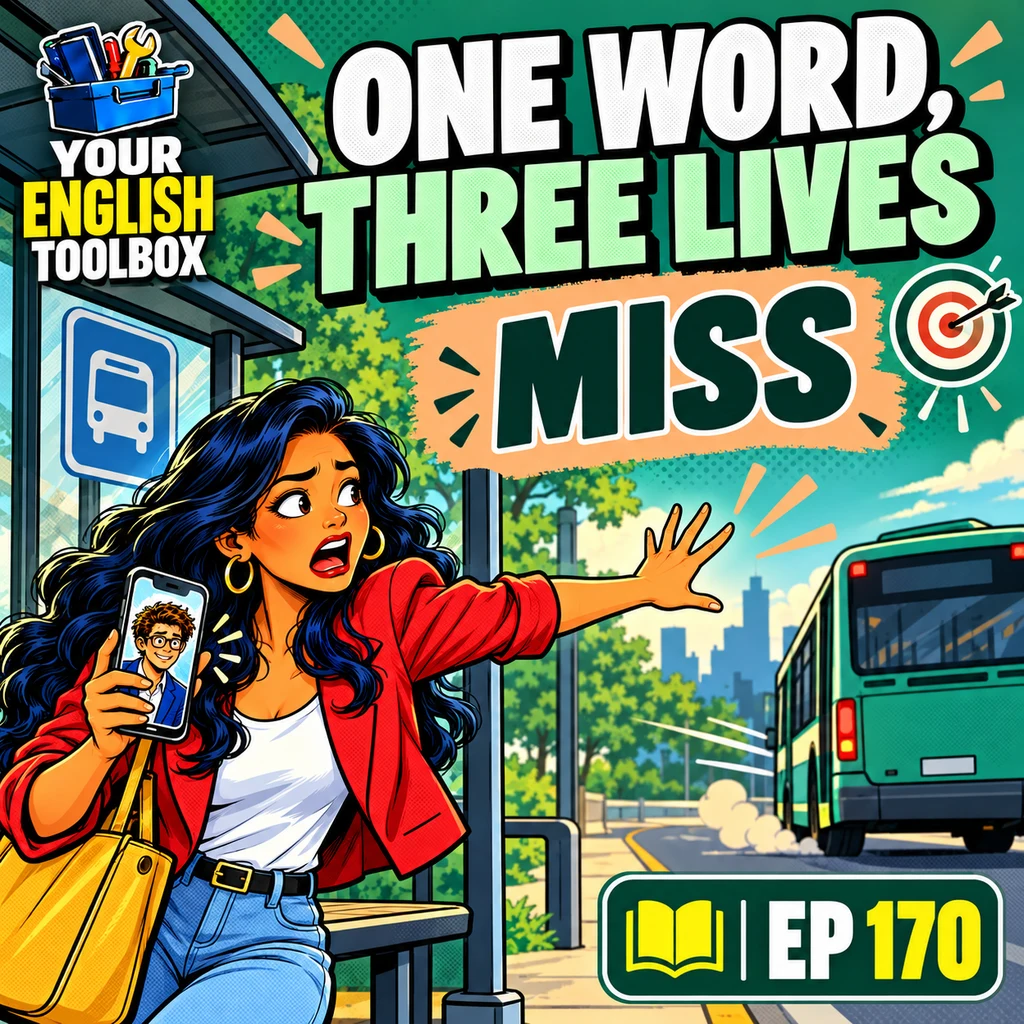
Julia, I missed the bus, I miss my sister, and I missed the target.
How can one small word do three different jobs?
Welcome to One Word, Three Lives, from Your English Toolbox.
I am Julia.
And I am Martin.
Today our word is miss.
Three everyday situations will help you understand three of its common meanings.
Life one: you arrive at the bus stop just as the bus drives away.
You missed the bus.
You were too late to catch it.
We can miss a train or a flight in the same way.
I left home late and missed my train.
You can also miss an event because you are not there.
I was ill, so I missed the meeting.
That does not necessarily mean you arrived late.
It means you did not attend.
So the important idea is not taking part in, catching or experiencing something you intended to.
Exactly.
Life two: your sister lives far away, and you wish she were with you.
You miss your sister.
Here miss describes a feeling.
I feel her absence, and I would like to see her.
We can miss people, places or familiar experiences.
I miss my old neighbourhood.
She misses having lunch with her friends.
That last example is useful.
After miss, we can use a noun or a verb ending in ing.
I miss cooking with my sister.
Not I miss to cook.
I miss cooking.
And compare these two sentences: I missed the meeting.
I miss our meetings.
The first probably means I did not attend.
The second suggests I wish our meetings were still happening.
Context tells us which meaning we need.
Life three: you throw a ball at a target, but the ball goes past it.
You miss the target.
You fail to hit it.
He tried to hit the basket, but he missed.
We can use miss without naming the target when the context is clear.
And the idea can be figurative.
If you miss the point, you fail to understand the main idea.
The point is like a target for your understanding.
For example: You noticed the price, but you missed the point.
I was asking whether we need it at all.
Let us test the three lives.
I was stuck in traffic, so I missed my flight.
Is that arriving too late, feeling someone's absence, or failing to hit a target?
Arriving too late.
Next: Since I moved away, I miss walking beside the sea.
Feeling the absence of an experience.
Finally: The player threw the ball and missed the target.
Failing to hit it.
Now make two short sentences of your own.
Begin with I missed, then begin with I miss.
For example: I missed the bus yesterday.
I miss seeing my friends every morning.
One word, but the situation changes its meaning.
On our episode page at yourenglishtoolbox.com, you can compare the three meanings and their examples in the vocabulary cards.
The link is in the description.
Next time you hear miss, ask yourself: what is missing from this situation?
A journey, a person or a target?
See you next time.