The audio controls above still work. Interactive translation, saving and practice need JavaScript. You can read the complete transcript and download your study materials below.
Complete English transcript
Today I want to tell you a short story.
It is an imagined example, not something that really happened.
Imagine I have an idea for a Saturday conversation club.
I explain it to a classmate, and she listens carefully.
Then she says, "It's quite good."
In my head, I hear: wow, it is very good!
So I make posters, and I tell my friends the idea is a success.
A few days later, she tells me more.
She says, "It's quite good, but the time is a problem, and the room is small."
My excitement goes down.
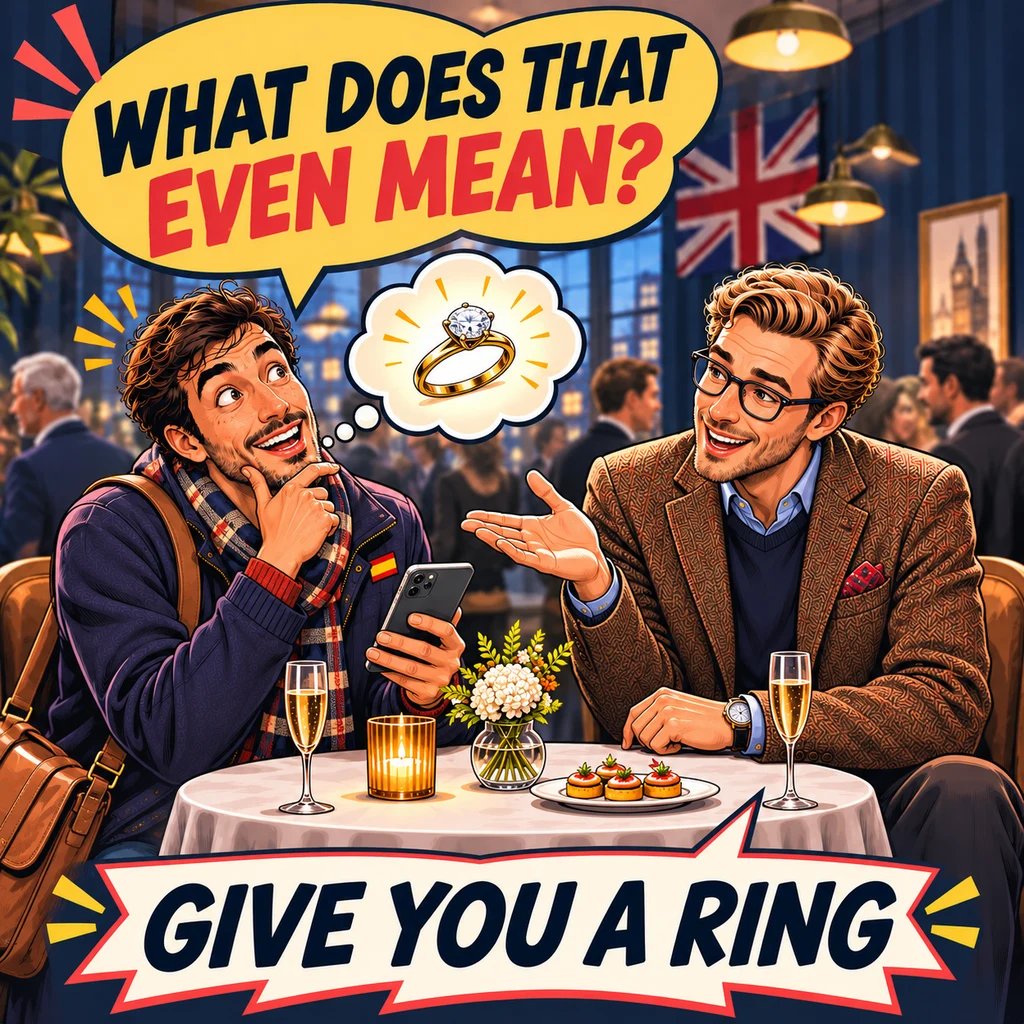
So, what does that even mean?
Was "quite good" a compliment, or not?
Welcome to What Does That Even Mean?
I'm Martin.
And I'm Julia.
Juan, this is a very common question.
The word is quite, and it is a small word with a big job.
In British English, quite has more than one meaning, and the meaning depends on the word after it.
With adjectives that you can measure, like good, tired, or interesting, quite often means fairly, or to some degree.
For example, "The soup is quite good, but I'd like more salt."
So "It's quite good" can mean: it is good, but it is not great.
But the strength can change.
In American English, quite with these adjectives often means very.
So a speaker used to American English might mean "very good" when they say "quite good."
That is why the speaker, the tone, and the situation matter.
This is not a rule about every person from one country.
It can also be a polite way to soften an opinion, so the word is not always a strong signal.
So my classmate could mean "fairly good," and I heard "very good."
Yes, that is possible.
There is no mistake in your hearing, because the word really can be unclear.
Now let's compare three expressions.
First, quite good.
Usually this means good to a noticeable degree, but the strength depends on the speaker and the tone.
Second, quite sure.
Here, quite usually makes the feeling stronger.
For example, "I'm quite sure the train leaves at six" means the speaker feels very sure.
Third, not quite.
This means not completely, or almost.
For example, "I'm not quite ready" means I am almost ready, but not completely.
So the same small word can sound weaker, stronger, or almost complete.
One more pattern: quite a, before a noun.
For example, "It was quite a surprise" usually means a big surprise.
Then how can I understand what the person means?
Look for clues.
Listen to the voice: is it warm, or flat?
Does the person say "but" after quite good?
And ask what comes next.
If the person gives you a list of problems, they probably mean fairly good.
If the person asks where to sign up, that suggests interest, but it still does not prove exactly how strong their praise is.
You can also ask a friendly question.
For example, "What would make it very good?"
Here are two more.
"Do you mean it is good, or very good?"
"Would you come to the club?"
All three are polite, and they show that you want an honest answer.
That is a much better plan than posters.
The difficult part was not the word alone.
It was making posters before I asked.
Next time, I will ask before I decide.
For the club, I will look for a bigger room and a better time.
Now let's try a challenge.
Listen to each sentence, and decide what quite means.
Number one: "The film was quite good, but it was a little long."
Probably fairly good, not amazing.
The word but gives us a clue.
Number two: "I'm quite sure he said Friday."
Very sure.
Here, quite makes the feeling stronger.
Number three: "I'm not quite ready."
Almost ready, but not completely.
Number four: someone says, "It's quite good!" with a big smile.
Then they ask, "Where can I buy it?"
Probably positive.
The question suggests real interest, although it does not tell us exactly how strong the praise is.
So here is my plan.
Listen to the tone, notice what comes next, and ask a follow-up.
Remember, this is a guide, not a rule, because speakers are different.
Different speakers use quite in different ways, so it is better to ask than to guess.
You can download a PDF with these three expressions on yourenglishtoolbox.com.
Keep it, and read it again before a conversation.
The link is in the description.
Thank you for listening.
See you next time.
Bye for now.