EN⚫ Welcome to Your English Toolbox, your Slow English Podcast where we train your ears step by step.
EPISODE 22 · 15 MIN · SLANG & IDIOMS
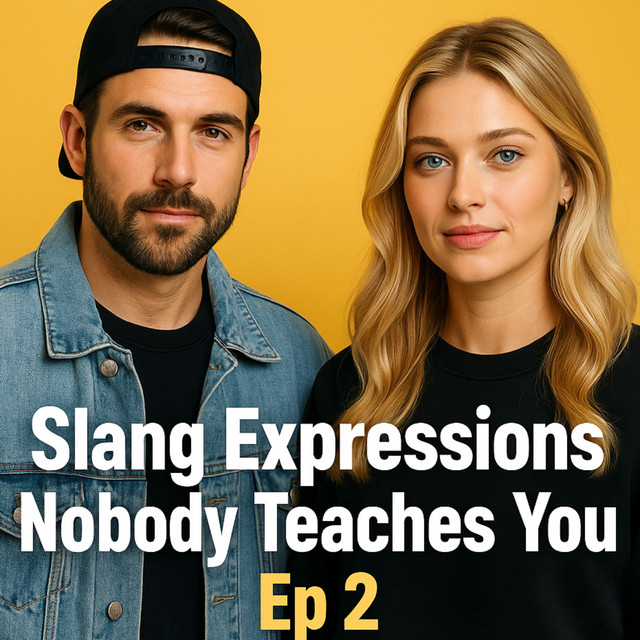
Slang Expressions Episode 2
Welcome back to the Slow Listening Podcast , powered by Your English Toolbox .
Full episode notes on Acast ↗Find your country — or stay in English
100% English mode
EN⚫ I am Martin.
EN⚪ And I am Julia.
EN⚪ Thank you for being here with us today.
EN⚫ Before we start, I want to ask you a small favour.
EN⚫ If you learn something new today, please leave a comment when you finish listening.
EN⚫ Your comments are the way platforms recognise that our community is alive, active, and growing.
EN⚫ Every single comment helps us reach more learners and keeps this project strong.
EN⚪ Today we explore eight highly frequent slang expressions that native speakers use constantly.
EN⚪ You will hear them in YouTube videos, TikTok comments, gaming chats, podcasts, and everyday conversations.
EN⚪ These words move fast. ⚪ They change.
EN⚪ They evolve.
EN⚪ And if you do not understand them, you can feel lost, even if your grammar is perfect.
EN⚫ So our mission today is simple.
EN⚫ We slow down the slang.
EN⚫ We explain it with clear examples.
EN⚫ We use it in stories.
EN⚫ And we help you recognise it when you hear it in real life.
EN⚪ The eight expressions in today’s episode are based, sus, bruh, ate, vibe, salty, flex, and down bad.
EN⚪ Each one has a different emotional flavour.
EN⚪ Some are funny.
EN⚪ Some are dramatic.
EN⚪ Some are sarcastic.
EN⚪ Some come from gaming culture.
EN⚪ Others come from Black American English, pop culture, or online communities.
EN⚫ And at the end of this episode, you will understand all of them with confidence.
EN⚫ You will also hear a long story combining all eight expressions in one narrative.
EN⚫ That story will help you remember everything naturally and easily.
EN⚪ Based is a very interesting expression.
EN⚪ It means you are saying something confidently and honestly, even if other people disagree.
EN⚪ It means you are not afraid to speak your truth.
EN⚫ If someone says, “That’s based,” they mean, “That’s brave,” or “That’s true,” or “I respect what you said.”
EN⚪ Example.
EN⚪ You say, “I think slow learning is better than fast learning.” ⚪ Your friend responds, “Based.” ⚪ It means they support your opinion completely.
EN⚫ Based can also mean that something is morally grounded or aligned with good values.
EN⚫ For example.
EN⚫ “Helping beginners without judging them is so based.”
EN⚪ Mini-scene.
EN⚪ Imagine you are studying English, and someone laughs at your accent.
EN⚪ You look at them and say, “I am improving every day.” ⚪ Another person who heard you says, “Based.” ⚪ They admire your confidence.
EN⚫ Sus means suspicious.
EN⚫ It is short, fast, and extremely common online.
EN⚫ People use sus when something feels strange, dishonest, or not quite right.
EN⚪ Example.
EN⚪ Your friend says, “I studied for ten hours today.” ⚪ You look at him and say, “That sounds sus.”
EN⚫ Another example.
EN⚫ A coworker says, “I didn’t eat your lunch,” but there is sauce on his shirt.
EN⚫ You whisper, “Sus.”
EN⚪ Mini-scene.
EN⚪ Imagine you ask someone, “Why were you late?” ⚪ And they answer, “I was fighting a giant duck.” ⚪ You look at them and say, “Bruh… that’s sus.” ⚪ And now we already used another slang word that is coming soon.
EN⚫ Bruh is a universal reaction word.
EN⚫ It is like “seriously?” or “really?” or “come on.” ⚫ It expresses disbelief, frustration, surprise, or even admiration depending on the context.
EN⚪ Example.
EN⚪ You drop your phone for the fifth time today.
EN⚪ You say, “Bruh.”
EN⚫ Example two.
EN⚫ You see an amazing sunset.
EN⚫ You say, “Bruh, look at that sky.” ⚫ In this case, bruh means “wow.”
EN⚪ Bruh can also be used when something is obviously ridiculous.
EN⚪ Example.
EN⚪ The teacher says, “This assignment is due tomorrow morning.” ⚪ The whole class reacts with, “Bruh.”
EN⚫ Mini-scene.
EN⚫ You enter your room and see your dog sitting on your laptop like a king.
EN⚫ You look at him and say, “Bruh, why?”
EN⚪ Ate is modern slang meaning someone did something extremely well.
EN⚪ It comes from the idea of “devouring” the challenge.
EN⚪ If someone “ate,” they performed perfectly, confidently, beautifully.
EN⚫ Example.
EN⚫ Your friend presents a project with great energy, great structure, and a great voice.
EN⚫ Later you tell him, “You ate.”
EN⚪ Example two.
EN⚪ Someone posts a dance video.
EN⚪ The comments say, “She ate,” meaning she performed amazingly.
EN⚫ Mini-scene.
EN⚫ Your coworker gives a speech in English.
EN⚫ You watch, and your jaw drops because it is so good.
EN⚫ After the meeting, you smile and say, “You ate that presentation.”
EN⚪ Vibe is one of the most common modern words in English.
EN⚪ A vibe is the emotional atmosphere of a person, place, or situation.
EN⚪ It can be positive or negative, calm or chaotic.
EN⚫ Example.
EN⚫ “This café has good vibes.” ⚫ It means the place feels pleasant, relaxing, or friendly.
EN⚪ Example two.
EN⚪ “He gives me strange vibes.” ⚪ That means the person feels a bit uncomfortable or unusual.
EN⚫ You can also vibe as a verb.
EN⚫ It means to relax, enjoy, listen to music, or just feel good in a situation.
EN⚪ Mini-scene.
EN⚪ You enter a room with soft lights, calm music, and warm colours.
EN⚪ You say, “This place is a vibe.”
EN⚫ Salty means jealous, bitter, annoyed, or frustrated, usually in a funny way.
EN⚫ When someone is salty, they react dramatically to something small.
EN⚪ Example.
EN⚪ Your friend loses a game and refuses to talk.
EN⚪ You laugh and say, “Don’t be salty.”
EN⚫ Example two.
EN⚫ Someone says, “I am not angry,” but they clearly are.
EN⚫ You whisper, “Salty.”
EN⚪ Mini-scene.
EN⚪ You get a promotion at work.
EN⚪ Your coworker congratulates you, but their smile is fake.
EN⚪ Later your other friend says, “He was salty.”
EN⚫ Flex means to show off something proudly, usually in a fun or playful way.
EN⚫ It can be positive or teasing depending on the tone.
EN⚪ Example.
EN⚪ “She is flexing her new shoes.” ⚪ That means she is showing them off confidently.
EN⚫ Example two.
EN⚫ A friend says, “I only slept four hours, but I feel great.” ⚫ Someone replies, “We get it.
EN⚫ You are flexing.”
EN⚪ Mini-scene.
EN⚪ You cook a perfect meal and post a photo online.
EN⚪ Someone comments, “Okay chef, flex.”
EN⚫ Down bad means extremely sad, desperate, or emotionally defeated, usually because of love or rejection.
EN⚫ It is dramatic, funny, and exaggerated.
EN⚪ Example.
EN⚪ “He looked at her Instagram for two hours.
EN⚪ He is down bad.”
EN⚫ Example two.
EN⚫ “She wrote him a five-paragraph message at three in the morning.
EN⚫ She is down bad.”
EN⚪ Mini-scene.
EN⚪ You see your friend listening to sad music in the dark.
EN⚪ You ask, “Are you okay?” ⚪ He says, “No. ⚪ I am down bad.”
EN⚪ Now it is time for a full story that uses all eight slang expressions naturally.
EN⚪ This story will help the vocabulary stay in your memory.
EN⚫ Last Saturday, we went to a new café near the river.
EN⚫ The place had warm lights, soft music, and friendly energy.
EN⚫ The moment we entered, I said, “This place is a vibe.”
EN⚪ We sat down near the window, and a few minutes later, our friend Daniel arrived.
EN⚪ He looked confused, nervous, and a little chaotic.
EN⚪ I asked, “What happened?”
EN⚫ Daniel sighed and said, “I just had the weirdest morning of my life.”
EN⚪ He explained everything.
EN⚪ His date cancelled on him with a strange text message.
EN⚪ The message said, “Hey, something came up, sorry.” ⚪ But she was posting photos on Instagram at the same time.
EN⚫ I said, “Bruh.” ⚫ Julia whispered, “Sus.”
EN⚪ Daniel continued.
EN⚪ “I am not angry,” he said.
EN⚪ But his voice sounded very salty.
EN⚫ We ordered our drinks, and while we waited, Daniel showed us a video he made.
EN⚫ It was a short clip where he cooked an amazing breakfast. ⚫ Perfect eggs, perfect toast, perfect camera angle.
EN⚫ Julia said, “Wow, you are flexing.”
EN⚪ Daniel laughed and said, “You know what?
EN⚪ She missed out.
EN⚪ This breakfast was based.”
EN⚫ When the waiter brought our drinks, something hilarious happened.
EN⚫ The waiter accidentally tripped a little, but he recovered with style and saved all the glasses.
EN⚫ I said, “He ate.”
EN⚪ Later, we asked Daniel what he planned to do now.
EN⚪ He looked out the window dramatically.
EN⚪ He said, “Nothing.
EN⚪ I am down bad.
EN⚪ I need time to heal.”
EN⚫ Julia smiled and said, “Bruh, you are being dramatic.”
EN⚪ Suddenly, Daniel pointed outside.
EN⚪ “Wait,” he said.
EN⚪ “Is that her?”
EN⚫ We turned around and saw his date walking by.
EN⚫ She looked happy and relaxed.
EN⚫ Daniel whispered, “This is sus.”
EN⚪ We watched them meet outside the café.
EN⚪ They talked for a minute.
EN⚪ Then she laughed, touched his arm, and gave him a small gift.
EN⚫ Daniel returned to the table smiling like a teenager.
EN⚫ “What happened?” I asked.
EN⚪ Daniel said, “She apologised.
EN⚪ She explained everything.
EN⚪ And she gave me cookies.”
EN⚫ I said, “Based.”
EN⚪ Julia added, “So you are not down bad anymore?”
EN⚫ Daniel laughed and said, “No. ⚫ Now I am up good.”
EN⚪ The three of us smiled.
EN⚪ And the café continued to feel like a perfect vibe.
EN⚫ Let us review quickly.
EN⚫ Based means confident truth.
EN⚫ Sus means suspicious.
EN⚫ Bruh is a reaction word.
EN⚫ Ate means someone performed amazingly.
EN⚫ Vibe means emotional atmosphere.
EN⚫ Salty means bitter or jealous.
EN⚫ Flex means show off.
EN⚫ Down bad means emotionally defeated.
EN⚪ These expressions are everywhere in modern English.
EN⚪ You will hear them in short videos, podcasts, comments, and conversations.
EN⚪ Now you can understand them with confidence.
EN⚫ If you enjoyed this episode, please leave a comment before you go.
EN⚫ Your comments show the platforms that our community is real, strong, and growing.
EN⚫ This support helps us continue creating new episodes every week.
EN⚫ Tell us which slang expression you liked the most or which one you want to practice next.
EN⚪ Thank you for listening.
EN⚪ We will see you in Episode Three.